
I noticed a lot of hipsters and self-described cinephiles hanging out on the sidewalk after a weekend screening of Ken Russell’s newly restored The Devils. They all really wanted to talk about the movie, but when the conversation turned to other Ken Russell movies, and I mentioned my admiration for his 1975 musical Lisztomania, I was met with a blank stare and the same question, “List-o-WHAT?”
Then, in two different encounters, I mentioned Whore, Ken Russell’s 1991 erotic thriller starring Theresa Russell, and these movie starved strangers apprehensibly walked away from me with a look of worry and discontent. They didn’t know what I was talking about.
Standing under that dimming marquee, I realized a lot of eager audiences had come out to see Ken Russell’s magnum opus without any understanding of his filmography as a complete body of work. They just wanted to watch this film everyone was talking about on socials, curious to discover what all the blasphemous fuss was about.
I get it. I did the same thing back in 1998, when Orson Welles’s Touch of Evil had been rereleased. At the time, I was just paying to see the movie because of the hype surrounding it, not really educated on Welles or his filmography. Sure, I’d seen Citizen Kane in film school, but I didn’t bother doing my homework.
I remember standing outside the theater the night after the late show was over. All these film nerds I knew from around town were talking about Welles and his place in Hollywood history. His work. And His importance to the art of cinema. Every time it was my turn to talk, I felt like some wannabe punk dweeb wearing a Rancid Vat T-shirt, being asked to name at least two of their songs. I couldn’t do it.
Now that I’m older, I don’t feel superior knowing Ken Russell’s filmography better than most of the moviegoers rushing out to see The Devils. It actually makes me feel like a loser. I had all this free time, and I used a lot of it to watch his back catalogue. I’m not cool. I’m just a lonely movie junky with no social life and nothing better to do.
But on that note, I’d just like to take this time to tell anyone who loved The Devils to seek out and watch Lisztomania.
Because it’s amazing.
Ken Russell’s The Devils made $1.7 million at the domestic box office in its rerelease weekend, playing in only 350 theaters. For a 55-year-old film with an NC-17 rating and a history of censorship, that’s a remarkable result. Warner Bros.’ release of the film’s restored 4K version has turned a long-suppressed piece of cinema into a genuine theatrical event, hopefully reminding audiences that Russell was one of the most confrontational filmmakers ever to work within the studio system.
There’s this great chance to experience The Devils on the big screen like never before, and audiences are turning up. That’s awesome. But Ken Russell made a lot of movies. I’d hate to see this moment pass without more people checking out what else he could do.
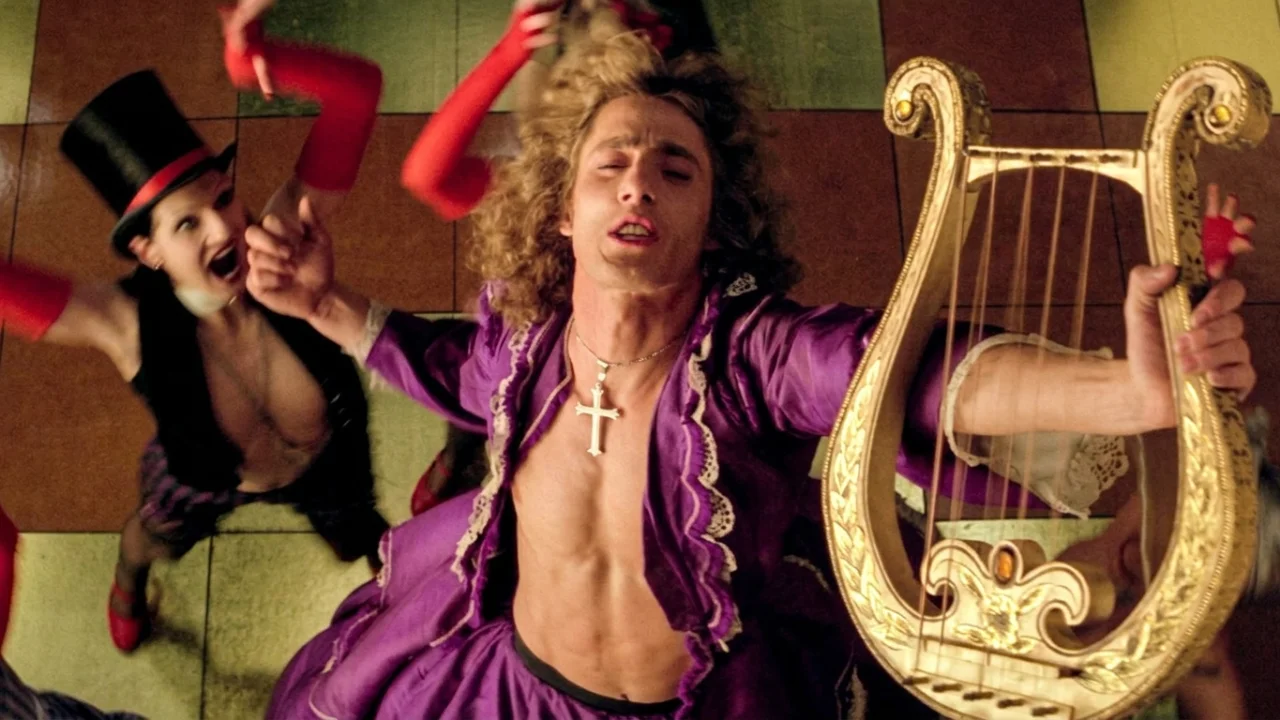
Released in 1975, just four years after The Devils, Lisztomania stars Roger Daltrey, the lead singer of The Who, as Franz Liszt, the Hungarian composer and pianist whose performances inspired a phenomenon that came to be known as Lisztomania. The term described the intense public frenzy surrounding Liszt, whose admirers treated him less like a conventional classical musician and more like a modern pop idol.
Russell saw an opportunity to turn that historical episode into a rock opera, and the result is about as far from a respectable biopic as you can get. This isn’t Amadeus, though that 1984 Oscar winner did pull inspiration from what Russell accomplished.
Daltrey’s Liszt navigates a world of sexual obsession, celebrity worship, religious absurdity, and historical figures behaving in ways that would make a conventional biographer reach for the smelling salts.
Rick Wakeman, keyboardist for Yes, provides the film’s music, while Ringo Starr appears as the Pope. Richard Wagner, played by Paul Nicholas, becomes a vampire with plans involving a monstrous creation called the Frankenviking. If that sounds like a film made by someone who was determined to see how much insanity he could fit into a single production, you’re beginning to get the idea.
The connection to The Devils goes beyond the director’s name on the credits. Both films are interested in the way people surrender themselves to figures they believe possess extraordinary power. In The Devils, religious hysteria becomes a weapon that corrupt authorities use to destroy a man. In Lisztomania, audiences turn a musician into an object of worship, while Russell uses the machinery of celebrity to take aim at the people who exploit that devotion.
The difference is how Russell approaches the material. The Devils is a brutal historical drama in which the excesses of its imagery serve a deeply angry story about political and religious authority. Lisztomania takes Russell’s appetite for excess and turns it into a gleefully ridiculous fantasy. Its historical characters become pop-culture caricatures. Its visual ideas lurch from one outrageous image to another. The story has very little interest in behaving like a conventional biopic.
It’s also a fascinating snapshot of the era in which it was made. Russell had already adapted The Who’s Tommy into a successful film earlier in 1975, and Lisztomania reunites him with Daltrey for a much stranger musical experiment. Instead of adapting a rock opera about a fictional character, Russell takes the life of a real composer and filters it through the aesthetics of glam rock. The result feels like a collision between 19th-century European music and the flamboyant excess of 1970s rock culture.
Not everyone was interested in that collision. Lisztomania was savaged by many contemporary critics and failed to achieve the commercial success of Tommy. Its reputation never grew into anything quite like the mythology surrounding The Devils. One film became notorious for its battles with censorship, while the other was left to be rediscovered by people willing to embrace its peculiar brand of cinematic madness.
That difference in reputation is part of what makes Lisztomania worth seeking out. You don’t have to consider it a lost masterpiece. And you certainly don’t have to love every moment of it. Russell’s approach can be exhausting, and the film’s commitment to provocation sometimes feels more interesting than its storytelling. But it offers a chance to see a filmmaker pushing his own sensibilities in a direction that few other directors would have attempted.
The good news is that you don’t have to wait for another theatrical revival to see it. Lisztomania is available through the Criterion Channel, and digital rental and purchase options are listed through services including Apple TV and Amazon. For collectors, the Warner Archive DVD is another option, while a UK DVD edition includes a commentary by Russell himself.
So, by all means, go see The Devils while you have the chance. Take in the restored film and enjoy it for what it represents. It’s important to understand why its return matters. It’s great to experience the work that has kept Russell’s name alive among generations of film fans.
Then consider spending another evening with a movie about a rock-star version of Franz Lisz. If you loved the grand nature and cinematography of The Devils, trust me, you are going to fall in love with this behemoth of film craft.
But, hey? Understand that you might hate Lisztomania. You may even think Russell finally went too far. Or? Maybe you discover that the man responsible for The Devils had an entirely different kind of cinematic madness waiting for you.
Either way, don’t let The Devils be the only Ken Russell movie you ever watch. Because man, once you get to his work in the ’80s, and then the ’90s, you’ll experience what feels like a downward slide in visual triumph and a deep exploration of the human experience.
My relationship with Russell’s work is actually backwards, as I saw Whore first, on the recommendation of Roger Ebert. Enticed by the VHS cover art of Liar of the White Worm and Gothic, I rented them only to be mostly bored and somewhat confused. I sort of started at the end. Now, a lot of you get to start at the beginning with The Devils. Move up the ladder. Don’t jump around. Go seek out Lisztomania and watch it on the biggest screen possible.
Then, go check out Altered States. I think you’ll come away from it all with a completely different outlook on life.