
I’m one of, if not the biggest Corey Haim fans on the planet. So when I fell into some money several years ago, I decided to invest in a bit of Hollywood history. I wanted to own Marty’s engine-powered wheelchair prop from the Stephen King werewolf thriller Silver Bullet. Only to find out that it had been dismantled, destroyed, and thrown in a dumpster after filming had wrapped way back in 1984.
I know. I was shocked.
Sure, there have been recreations and some people are even 3D printing costume-built Silver Bullet wheelchairs today. But the original screen-used prop that we see Marty escape Reverend Werewolf on no longer exists. That’s pretty sad. But that’s the reality of the business back in the mid-‘80s.
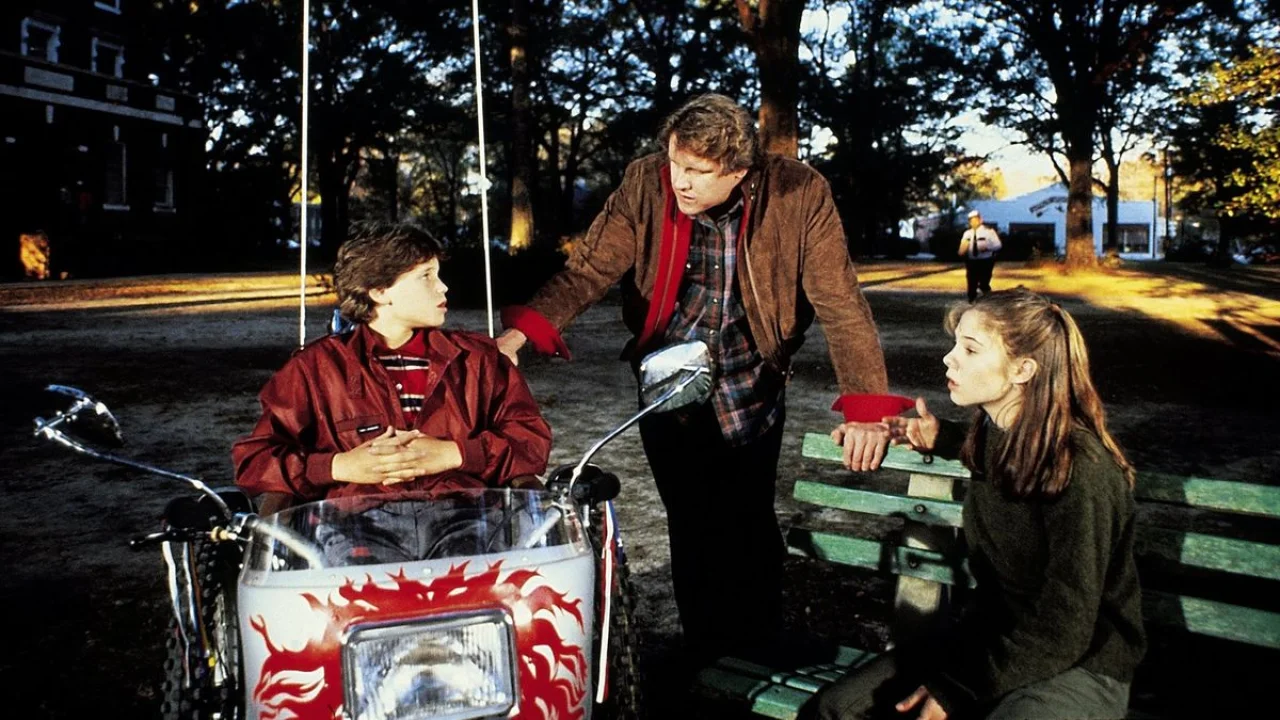
In the movie Silver Bullet, Marty’s Uncle Red (played by an unhinged Gary Busey) builds his nephew a souped-up, gas-powered racing wheelchair so that Marty can escape the house at night, race into the woods, and light off fireworks. The rocket-engined ride helps Marty escape the town’s resident werewolf on more than one occasion. And it even survives the climactic battle with Reverend Werewolf.
This prop was so inspiring, it even helped Segway inventor Dean Kamen come up with his own real-life high-performance all-terrain wheelchair prototype named the UPnRIDE / Silver Bullet concept years later. If anyone was going to own the real prop, you would have thought it would be him. But even Kamen couldn’t get his hands on an authentic Silver Bullet.
Why Was It Destroyed?
Back in the ‘80s, movie props weren’t as precious as they are now. While Silver Bullet was a legitimate Paramount Pictures release, it was also considered a mid-budget horror that the studio knew would flourish more on the burgeoning home video market than it would at theaters. This wasn’t a massive blockbuster by any means. And at the time, most major studios weren’t really interested in archiving or preserving minor mechanical props.
So into the dumpster it went. The shoot was taking place in North Carolina. Not on the Paramount Studios backlot in Hollywood. The wheelchair was this hulking, custom-built, gas-powered chair that no one wanted to lug back to California. So it was disassembled for parts, destroyed, and tossed into the trash behind the already broken-down catering tent.
No one working on the film had the foresight to preserve this monumental piece of film history. And if they did, it was laughed off as the screws were being de-riveted. Putting it into a museum or saving it for posterity was swatted away like a bothersome bug.
Modern-day collectors hunting for surviving pieces of Silver Bullet ephemera are out of luck. Not much is believed to have survived the production. It’s not even known if the iconic baseball bat owned by bartender Owen Knopfler is out there, somewhere. If it is, there is no current public record of who has it. And it’s never gone up for auction.
The practical werewolf suit and its complex 12-lever mechanical animatronic face mask (designed by Academy Award-winner Carlo Rambaldi) did not survive either. The latex and foam rubber elements used in 1980s special effects naturally degrade, rot, and crumble over a few decades if not kept in strict, climate-controlled museum environments. This was more a case of the mask and costume falling apart, and partially being recycled for other movies, than it being straight-up thrown in the waste basket.
The 4-inch Smith & Wesson Model 629 .44 Magnum revolver used in the climax, along with the actual prop silver bullets, were retained by the armorers or studio prop masters. Their current exact locations remain unverified in public registries.
Even the physical sets and background props are gone. The small-town residential homes in North Carolina used as backdrops during filming were completely uprooted and demolished in the 1990s to make room for a shopping center. But hey, that probably won’t stop Sean Clark from one day heading to those old stomping grounds to wave his hands around where the town used to be, letting us see what it looks like today.
Collectors seeking a piece of Silver Bullet will have to be content with posters and lobby cards from the film’s release in 1985. But even those are rare and hard to come by.
Even Corey Haim didn’t keep any of the physical props from Silver Bullet, so don’t think you’re driving up to Canada to pester his mom, Judy. I already asked her. She has nothing but sweet memories of making the movie. Corey was too young at the time to even ask about keeping anything. He was only 12, and this was like his 4th major acting role.
It’s the sad reality of ‘80s genre movies. A lot of them were being shot on the fly and for cheap. Producers and crew were usually eager to get to the next set, and weren’t keen on preserving what they thought was throwaway history. Also, there was all that walrus powder flowing freely, which seemed to be the bigger concern. So in 2026, we are left without some of the coolest props in Hollywood history.
At least we have the movies to remember them by. And a cheap 3D printer can bring us just a little closer to owning our own Silver Bullet wheelchair.