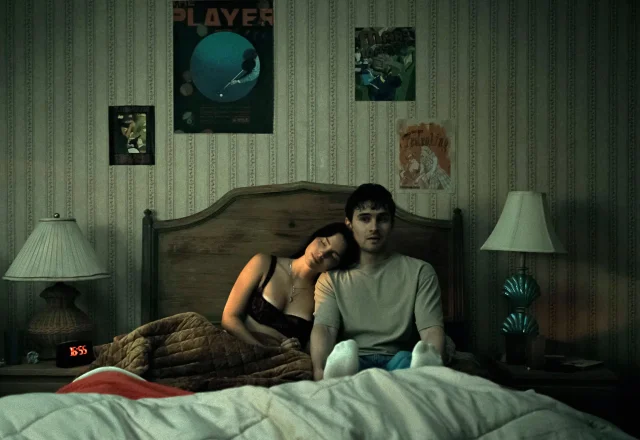


I’ve been obsessed with Endless Love for a couple of days now. Don’t come at me, saying it’s not a horror movie. The dude tries to melt his girlfriend and her family by setting their estate on fire, and it spirals into oblivion from there. Watch this trailer and tell me that this IS NOT a horror movie. You can’t do it. You know it’s true.
It’s definitely a precursor to what we see Curry Barker doing in Obsession. If you want to turn the horror hit into a heart-stopping Halloween double feature after watching star Inde Navarrette make her SNL debut, you couldn’t do better than pairing Obsession with Endless Love.
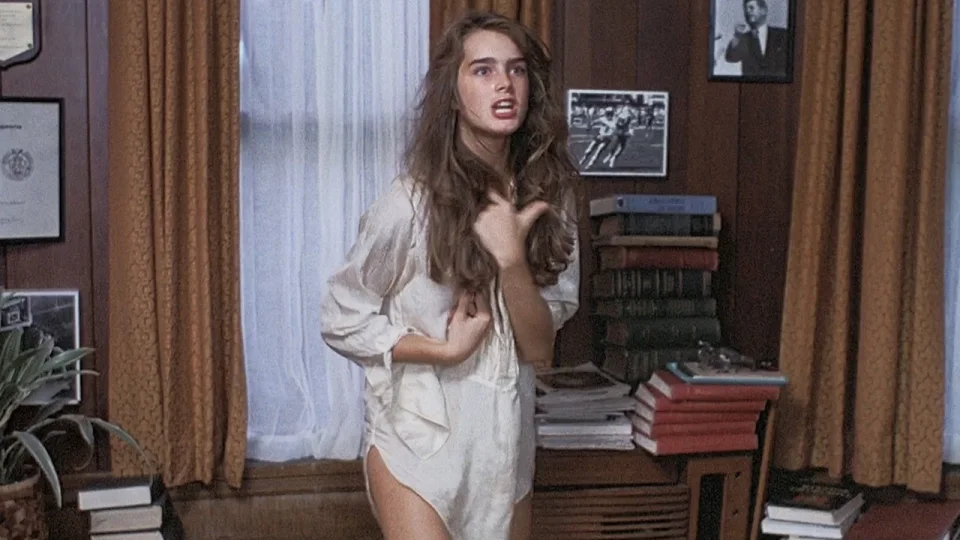
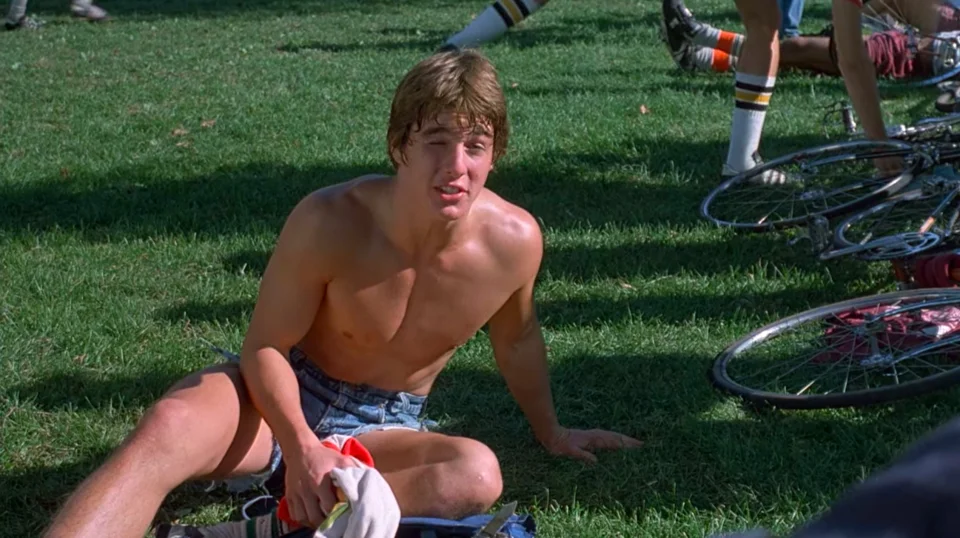
Released in 1981, Endless Love stars Brooke Shields as Jade Butterfield, a teenager who falls into an intense romance with David Axelrod, played by Martin Hewitt. Their relationship becomes a problem for Jade’s parents, who grow concerned about the toll it is taking on their daughter and her slipping grades. They eventually forbid the couple from seeing each other for 30 days. David, apparently unable to handle that kind of separation, decides to take matters into his own hands.
His plan is to start a small fire on the Butterfield family’s porch so he can swoop in and play the hero. Unfortunately, the fire gets out of control and burns down the family home. David is arrested, convicted of arson, and committed to a psychiatric institution. And that’s when Endless Love really starts heading into some seriously strange territory.
The film was directed by Franco Zeffirelli and based on Scott Spencer’s 1979 novel. While audiences may remember it most fondly for Lionel Richie and Diana Ross’ enormously popular title song, the movie itself has a much darker reputation. It also features early screen appearances from Tom Cruise and James Spader, along with Jami Gertz and Ian Ziering.
So, yes, Endless Love is technically a romantic drama. But anyone expecting a conventional love story is in for a surprise. David’s increasingly destructive obsession makes it an unexpectedly fitting companion to Obsession, particularly if you’re in the mood to watch a romance go spectacularly wrong.
A Romance That Goes Horribly Wrong
What makes Endless Love such an unexpectedly good companion to Obsession is how easily its story can be viewed through a horror lens. David’s feelings for Jade are presented as an intense teenage romance, but there is very little about his behavior that could be mistaken for healthy affection. He becomes an unstoppable presence in her life, refusing to accept boundaries or the possibility that she might want to be away from him. His obsession starts to feel less like a love story and more like a stalker movie.

The arson is where that distinction becomes impossible to ignore. David doesn’t respond to being separated from Jade with a little teenage heartbreak. He sets fire to her family’s home while they are inside, convinced that rescuing them will make him a hero. That’s the sort of setup you’d expect from a slasher or home-invasion thriller, not a sweeping romantic drama. The fact that David genuinely believes he’s doing something that will win Jade back makes the whole thing even more disturbing.
And the Butterfield family doesn’t simply get to move on after the fire. David’s actions help tear their lives apart. Their home is destroyed, the parents are left psychologically fractured, and the family is eventually pushed into further tragedy, including a traumatic car accident. David’s obsession becomes a destructive force that reaches far beyond his relationship with Jade. He doesn’t just threaten the girl he claims to love. He brings the entire family down with him.
There’s also something deeply unsettling about the way David sees the world. His logic is so distorted that he can convince himself setting a house on fire is an act of devotion. That disconnect between what he believes he’s doing and the damage he actually causes is the stuff of psychological horror. Even after his arrest and institutionalization, the sense of danger doesn’t disappear. David continues pursuing Jade, and the feeling that she and her family may never truly escape him hangs over the story.
Zeffirelli’s direction and the film’s romantic framing can make some of this easier to overlook. Put Lionel Richie and Diana Ross’ beautiful title song over the relationship and you get the impression of a grand, tragic love story. Take away the music for a moment, though, and you’re left with a young girl caught in the path of someone whose obsession is so extreme that he is willing to burn down her world just to get close to her.
That’s why I think Endless Love makes such a fascinating double feature with Obsession. Both stories take the idea of wanting someone and push it into deeply uncomfortable territory. One arrives wearing the clothes of a romantic drama. The other makes its horror intentions clear from the start. Watch them together and the similarities are hard to miss.
When Pop Hits Become Horror Soundtracks
There’s another reason Endless Love feels like such a fitting companion to Obsession: horror movies have spent years finding new ways to turn familiar pop songs into something unsettling. A sweet old hit can take on a completely different meaning when it’s paired with disturbing images, especially when the lyrics suddenly seem to describe something much darker than the original artist intended.
We’ve seen it happen with some memorable horror trailers. Jordan Peele’s Us took Luniz’s laid-back ’90s hit “I Got 5 on It” and transformed it into something genuinely unnerving with its eerie reworking. The trailer for M3GAN used Taylor Swift’s “It’s Nice to Have a Friend” to accompany a killer doll’s increasingly disturbing behavior. Candyman found a sinister new context for Destiny’s Child’s “Say My Name,” while You’re Next used Lou Reed’s “Perfect Day” to soundtrack a family gathering that turns into a nightmare. Even 10 Cloverfield Lane put Tommy James & The Shondells’ “I Think We’re Alone Now” to work in a story about a woman trapped with someone she may have very good reason to fear.
Sometimes filmmakers use a slowed-down or rearranged cover, while other times the original recording does the work. Either way, the trick is the contrast. A song associated with romance, happiness or nostalgia can become deeply uncomfortable when the images on screen reveal the violence lurking underneath. The familiar melody makes the disturbing scenes feel even more wrong, and the lyrics can suddenly sound like a warning.
That brings us right back to Endless Love. Lionel Richie and Diana Ross’ title duet is one of the most recognizable romantic songs of its era, but try listening to it while thinking about David Axelrod’s behavior. Suddenly, all that talk of eternal devotion has a much creepier edge. The song doesn’t need a sinister remix to fit into a horror double feature. The movie itself has already given it a disturbing new context.
Endless Love and Obsession Are Two Sides of Toxic Relationship Horror
When you look at Endless Love through a horror lens, it becomes a surprisingly close companion to Curry Barker’s breakout hit Obsession. The two movies are deeply disturbing mirror images of toxic relationship horror, even though they approach the subject from very different directions.
Endless Love wraps David Axelrod’s fixation in the language of tragic romance, while Obsession drops that pretense and turns the same psychological impulses into an unhinged supernatural nightmare. Both films get at the frightening reality of what happens when someone’s infatuation becomes so consuming that the person they claim to love is no longer allowed to make their own choices.
The similarities become especially clear when you look at what drives the men at the center of these stories. David cannot accept boundaries or even a temporary separation from Jade. His response is to cross increasingly extreme legal and ethical lines because he believes he is entitled to be with her. Bear, played by Michael Johnston, initially comes across as a socially passive nice guy who wants Nikki, played by Inde Navarrette, to love him. Rather than accept that her feelings are beyond his control, he uses the supernatural One Wish Willow to make it happen.
That’s where the two stories take their obsession in different directions, but arrive at an equally disturbing place. David loves an idea of Jade, not necessarily the person she is. He treats her like someone he has a right to possess, and his desperate attempt to look like a hero ends up burning down her family’s home and destroying their lives. Bear’s wish takes that same lack of regard for another person’s autonomy to a supernatural extreme. Nikki’s soul is stripped away, leaving her in an uncanny, fixated state that resembles a puppet without free will. He gets the devotion he wanted, but the person he wanted it from is no longer truly herself.
Neither film allows the idea of home to remain a safe one, either. In Endless Love, David’s actions bring destruction right to the Butterfield family’s doorstep. The fire destroys their home and leaves the family psychologically shattered. In Obsession, Nikki becomes trapped in a claustrophobic nightmare that changes her behavior and turns the relationship into a domestic purgatory for both of them. The threat in each movie gets inside the characters’ personal lives, leaving them with nowhere comfortable to retreat.
That’s what makes these such effective companion films. Both take aim at the hopeless romantic archetype, particularly the idea of the obsessed boy next door whose behavior gets mistaken for grand devotion. David’s stalking and arson are wrapped in sweeping melodrama, with Lionel Richie and Diana Ross providing a soundtrack that makes his fixation seem like part of some great tragic love story. Watch Obsession immediately afterward and that romantic framing becomes a lot harder to accept. Bear’s supernatural nightmare exposes the entitlement underneath the fantasy: the belief that a man is owed a woman’s unconditional love simply because he wants it badly enough. In that sense, Obsession takes the real-world mania of David Axelrod and gives it a monstrous, literal transformation.
Both movies also play like cautionary tales built around the old Monkey’s Paw idea of getting exactly what you wished for. David thinks setting the fire will give him an opportunity to reunite with Jade and play the hero. Instead, his grand gesture permanently fractures their lives. Bear gets what he asks for on paper, but a partner who loves him without having any choice in the matter becomes an erratic, terrifying physical and psychological prison. Neither man seems to understand that love without consent isn’t love at all.
Ultimately, the most disturbing element in either film isn’t a jump scare. It’s the gradual erasure of a woman’s agency. Jade spends much of Endless Love reacting to David’s increasingly destructive behavior, while Nikki becomes an exaggerated, unstable reflection of Bear’s desire to control her.
Inde Navarrette throws herself into that transformation with a frantic, unhinged performance that makes the consequences of Bear’s wish impossible to ignore. The horror in both stories comes from watching a man get so wrapped up in what he wants that the woman at the center of his obsession is barely allowed to exist as her own person.
Of course, Endless Love wasn’t exactly embraced by critics when it arrived in 1981. The film currently sits at 26% on Rotten Tomatoes, while its audience score is a much more divided 50%. It also collected several Golden Raspberry nominations, including Worst Picture, Worst Director and acting nominations for Brooke Shields and Shirley Knight.
There was controversy before the movie even reached theaters. The MPAA initially handed director Franco Zeffirelli an X rating because of the film’s sexual content, including scenes involving its teenage leads. Zeffirelli made multiple edits before the rating was changed to R. And that brings up an aspect of Endless Love that is particularly uncomfortable to revisit today.
Jade is supposed to be 15 years old, while Shields was just 16 during filming. The movie’s treatment of teenage sexuality and David’s increasingly disturbing fixation takes on a different dimension when you remember just how young its leading actress was. It’s a film that can inspire nostalgia for its famous theme song while leaving modern viewers wondering what exactly they were watching. Most will probably leave the movie with a stomachache.
Still, that strange combination of romantic nostalgia and deeply questionable behavior is part of what makes Endless Love such an interesting pairing with Obsession. Some viewers embrace it as an over-the-top guilty pleasure, while others find its melodrama absurd or depressing, and the original Scott Spencer novel has its own devoted admirers who prefer the book.
If you’re ready to put this double feature together, the 1981 Endless Love is currently available to stream through services including Tubi and Fandango at Home, with additional subscription and rental options depending on your location. Obsession, meanwhile, is streaming on Peacock. So you can go from Lionel Richie and Diana Ross singing about eternal devotion to Curry Barker showing what happens when someone takes that idea way too far.