

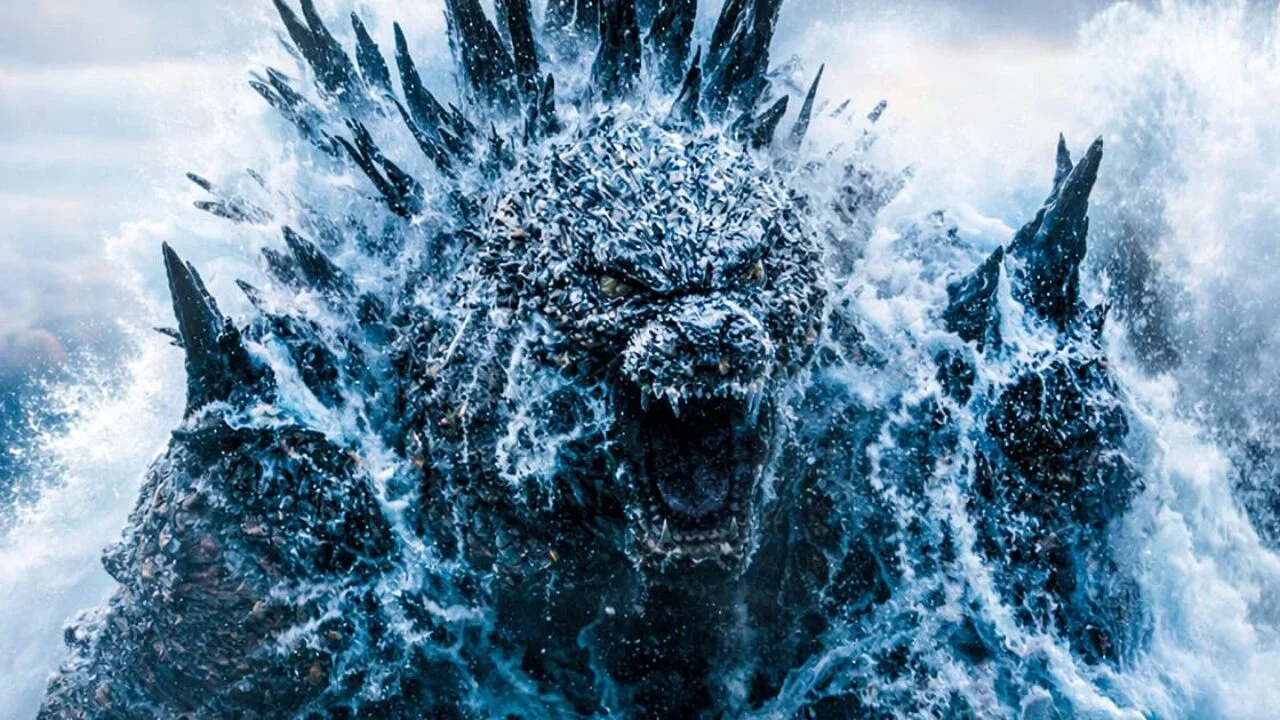
The upcoming Godzilla Minus Zero is making history as the first Japanese production to be filmed for IMAX. But if you’re expecting every minute of the movie to fill an enormous IMAX screen from top to bottom, there’s an important distinction worth understanding before you buy your tickets.
The film runs 135 minutes, with 75 minutes presented in IMAX’s expanded 1.43:1 aspect ratio. That means roughly 55% of the movie uses the taller frame, giving audiences a larger vertical image during those sequences. The remaining footage doesn’t use that same expanded aspect ratio.
This doesn’t mean the other scenes weren’t filmed with IMAX-certified cameras. The distinction comes down to the difference between the equipment used to capture a movie, the aspect ratio in which its scenes are presented, and the specific format used to shoot it.
What Does “Filmed for IMAX” Actually Mean?
According to the official announcements from Toho and GKIDS, Godzilla Minus Zero was shot using high-definition digital cameras certified by IMAX. Director Takashi Yamazaki worked with IMAX on the production, with the film’s sound and imagery optimized for the company’s theaters.
The certification is part of IMAX’s Filmed for IMAX program. It allows filmmakers to use approved digital cinema cameras while working toward a presentation tailored to IMAX screens and sound systems.
In practical terms, the label tells audiences that a film was produced and optimized for the IMAX experience. It does not automatically mean the entire movie will appear in an expanded aspect ratio, nor does it mean the production used traditional 70mm IMAX film cameras.
For Godzilla Minus Zero, the distinction matters because the movie’s 75 minutes of expanded 1.43:1 footage will offer a taller image than its standard widescreen scenes. Depending on the theater and its projection capabilities, IMAX presentations can use different aspect ratios, so the precise experience will vary by location.
Why Isn’t It Simply Called “Shot in IMAX”?
The terminology can be confusing because IMAX encompasses different technologies and presentation formats.
Traditional IMAX film photography uses large-format film cameras, including the substantial 15-perforation 70mm cameras associated with some of the format’s most ambitious productions. These cameras capture images on a large area of film, creating a different photographic process from digital cinema cameras.
Godzilla Minus Zero took a different route. It was filmed with high-definition digital cameras approved by IMAX, then optimized for the company’s theaters. That makes it a Filmed for IMAX production, rather than a movie shot entirely on traditional IMAX film cameras.
The distinction is not a declaration that one approach is automatically better than the other. Digital cameras can deliver exceptional image quality, and the final experience depends on factors beyond the camera itself. Framing, aspect ratio, image presentation, sound and the theater all play a part.
What matters for moviegoers is understanding what the label promises. With Godzilla Minus Zero, IMAX certification and optimization are part of the production, while the expanded aspect ratio is reserved for 75 minutes of the film.
How The Odyssey Is Different
Christopher Nolan’s The Odyssey provides a useful comparison. The 2026 film was shot entirely with IMAX film cameras, making it the first narrative feature to use those cameras for its entire runtime, according to the film’s official promotional material and IMAX.
That is a different technical achievement from being certified under the Filmed for IMAX program. While Godzilla Minus Zero uses approved digital cameras, The Odyssey captured every frame with physical IMAX film cameras.
The comparison also demonstrates why these labels shouldn’t be treated as interchangeable. A movie can be designed for IMAX presentation without being photographed entirely on IMAX film. A production can also use IMAX film cameras throughout its runtime without every theater necessarily presenting every scene in the same expanded aspect ratio.
Godzilla Is Going Big
None of this means Godzilla Minus Zero is getting a lesser IMAX release. The film’s official materials confirm that it was specifically optimized for IMAX screens, and its expanded-aspect-ratio sequences will give audiences a taller image during key portions of the movie.
The sequel follows the events of Godzilla Minus One, with director Takashi Yamazaki returning as writer and director, as well as overseeing the visual effects. The story picks up in 1949, two years after the previous film, as postwar Japan struggles to rebuild before another threat emerges.
Godzilla Minus Zero will receive IMAX early-access screenings in North America on November 3, 2026, before its wider theatrical release on November 6.
So, when you see Filmed for IMAX on the poster, remember that it describes a production and presentation process, not a guarantee that every scene will fill the entire height of every IMAX screen. In this case, 75 minutes will use the expanded 1.43:1 aspect ratio, while the rest of the movie will be presented in a standard widescreen format.
For a film featuring one of cinema’s most imposing monsters, those expanded sequences should offer plenty of room for Godzilla to make an impression.