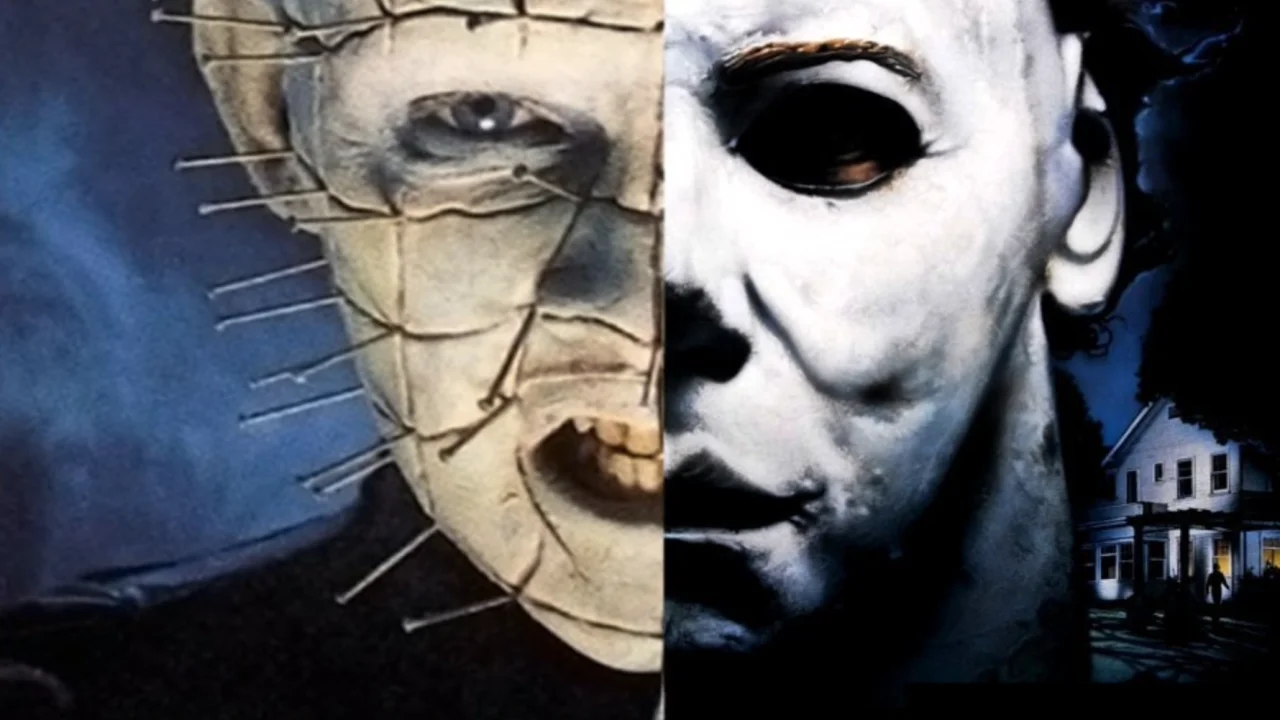
The Hell Priest Vs. The Shape. This crazy crossover almost became a reality after Freddy Vs. Jason killed it big time at the box office. But Halloween and Hellraiser proved to be two franchises that were impossible to cross-pollinate.
Hard to believe, but it’s true. There was a time when Michael Myers and Pinhead were going to meet up on the big screen. Not in a fan-made trailer or Marvel comic book. This was not some flight of fancy floated above the dreck line for easy engagement. Dimension Films genuinely explored a Halloween Vs. Hellraiser crossover between the late 1990s and early 2000s.
At one point, the project had the sewn-together title Helloween. That also happens to be the name of heavy metal band Helloween, who hail from Hamburg, Germany. Hopefully, Dimension was planning to reach out to them for a soundtrack theme song. That’s one collaboration we never got.
The story behind Helloween: Michael Vs. Pinhead is almost as entertaining as the movie itself might have been. The idea began when filmmaker Dave Parker noticed something very important about Dimension Films in the 1990s. The company had connections to both the Halloween and Hellraiser franchises, making a crossover between Michael Myers and Pinhead an obvious bit of corporate Frankensteinery.
Parker actually made a proof-of-concept trailer to sell the idea. He took footage from the Halloween movies, including Halloween: The Curse of Michael Myers, mixed it with footage from the first four Hellraiser movies and recorded new narration. He even created a final image in which the pumpkin skull from Halloween II opened up and revealed Pinhead’s pins.
Parker called his idea Helloween. He pitched it to Dimension, but the studio wasn’t ready to make that kind of movie. Parker later explained that the studio rejected his idea at the time because they did not believe horror crossovers were a safe bet. That turned out to be a pretty interesting miscalculation.
Because in 2003, Freddy Vs. Jason happened. And it was a huge hit. Not just at the box office, but also with fans of both franchises, slashing up twice the bang for their buck.
Freddy Vs. Jason Changed Everything
New Line Cinema released Freddy Vs. Jason in August 2003, finally putting two of horror’s biggest slasher icons in the same movie after years of development hell. The film became a major box-office success, making the idea of franchise mash-ups considerably more attractive to studios.
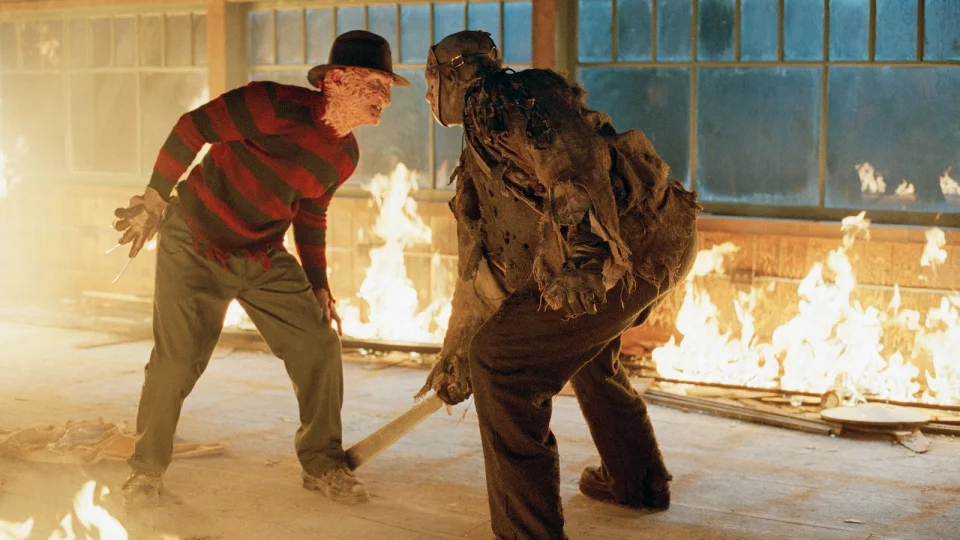
Dimension suddenly had its own pair of horror characters sitting on the shelf. According to Pinhead actor Doug Bradley, Dimension wanted a Hellraiser/Halloween crossover almost immediately after seeing how well Freddy Vs. Jason performed. Bradley said he had conversations with Clive Barker about the project, and Barker was interested in writing it.
Even crazier, John Carpenter was being considered to direct.
Barker and Carpenter returning to their respective creations for a movie about Michael Myers fighting Pinhead sounds like somebody’s dream convention panel, but Bradley discussed the possibility as a genuine project. Barker reportedly wanted to explore where the worlds of Hellraiser and Halloween could intersect rather than simply throw the two characters into a wrestling match.
For a brief moment, this thing was very real. Then came Moustapha Akkad.
The Michael Myers Problem
The biggest obstacle was not figuring out how Pinhead could possibly beat up a guy with a kitchen knife. It was getting Michael Myers into the same movie in the first place.
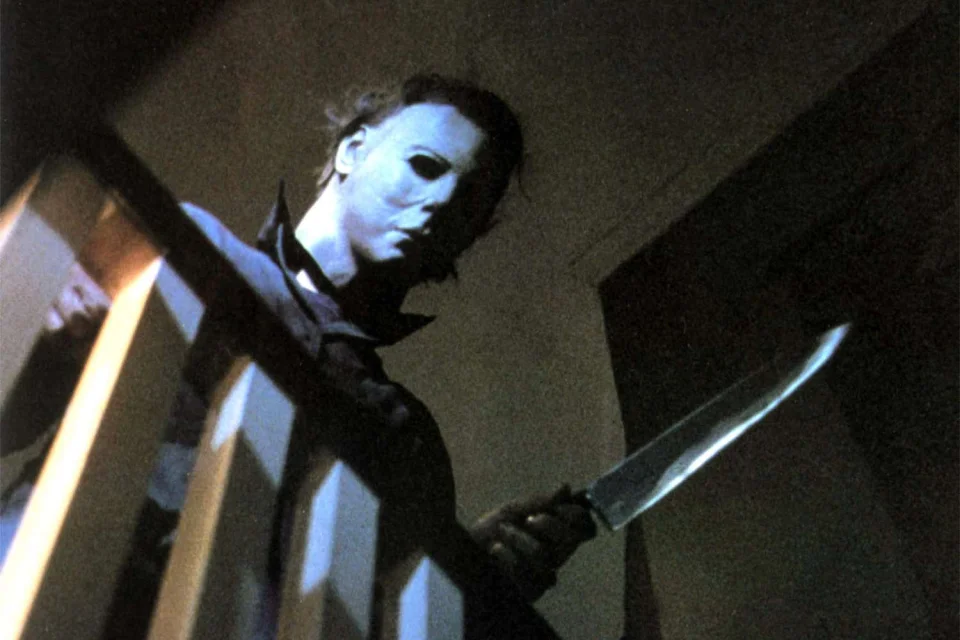
Moustapha Akkad, the longtime producer and central rights holder behind the Halloween franchise, had very specific ideas about what Michael Myers was supposed to be. Screenwriter Josh Stolberg later recalled pitching a Halloween project to Akkad and being handed what he described as the rules for the franchise’s universe.
Akkad was protective of the character and did not want Michael casually turned into another monster in somebody else’s supernatural universe.
Doug Bradley later said opposition from the Akkad family was the reason the crossover stopped moving forward. Clive Barker also publicly confirmed that he had been invited to write the movie, but said the people who controlled the Halloween rights did not want to make it.
There was another problem, too. The fans didn’t exactly scream for it.
The Poll That Helped Kill Helloween
Around the time the crossover was being considered, an online poll asked Halloween fans whether they wanted to see Michael Myers battle Pinhead. The reported result was not good.
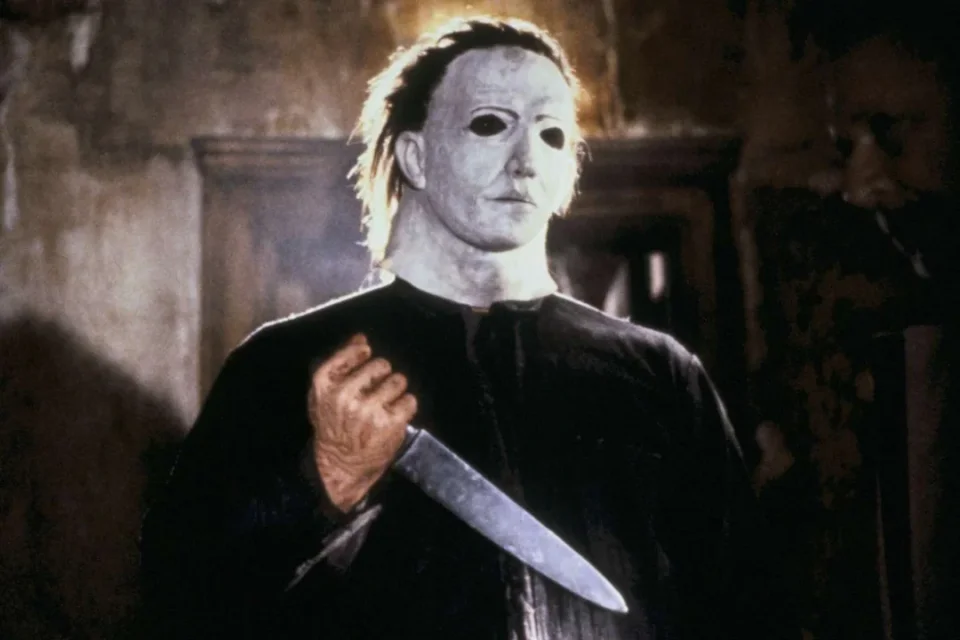
According to contemporary and later accounts, roughly 52 percent of respondents voted against the idea. Some later retellings give slightly different numbers, but the commonly cited figure is 52 percent opposed.
That might sound like a small margin, but it was enough to become part of the story of why the project died. And honestly, I get it. Sometimes magical slashers arrive from two vastly different planetary systems and should not be pitted against each other under any circumstance.
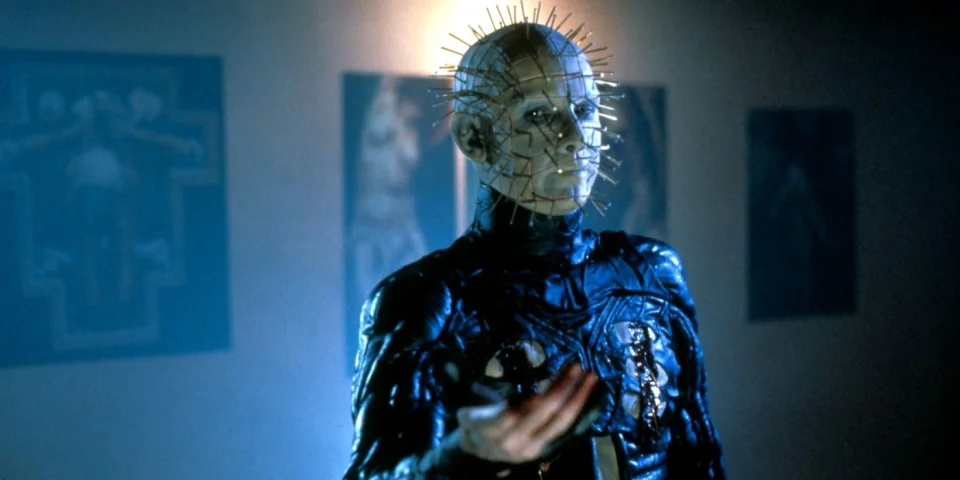
Pinhead is an interdimensional supernatural being whose powers involve opening portals to Hell. His hobbies include ripping people’s souls apart. All in ways that make Michael’s preferred method of stabbing someone with a kitchen knife seem almost quaint.
So Parker came up with a solution. A completely insane solution.
How Helloween Would Have Explained Michael Myers
Parker’s original pitch tried to answer one of the biggest questions surrounding Michael Myers: why the hell can’t this guy die? His answer was to rewrite Michael’s origin.
The story would have flashed back to October 31, 1963, when young Michael was still a six-year-old kid. Before murdering his sister Judith, Michael would encounter a mysterious man and receive the Lament Configuration, the puzzle box from Hellraiser.
Michael opens it. Instead of simply summoning the Cenobites, the box allows Samhain, described in the pitch as the Lord of the Dead, to escape Hell. Samhain then takes possession of Michael’s body. That becomes the new explanation for everything.
Michael’s murderous transformation is caused by Samhain’s evil taking control of him. His apparent immortality comes from the fact that Michael is essentially a physical vessel for an immortal supernatural entity. Shoot Michael? You’re shooting the shell. Stab Michael? Same problem. Blow Michael up? Good luck killing something that has already escaped death.
It is an absolutely bonkers way to explain the Halloween mythology, but it does solve the crossover’s biggest problem. Michael isn’t merely a guy in a mask anymore. He’s carrying something powerful enough to stand toe-to-toe with the Cenobites.
The story would then jump to the present, where the Lament Configuration is discovered inside the abandoned Myers house. Someone opens the box, Pinhead and the Cenobites arrive, and Pinhead recognizes that Michael is carrying a soul that doesn’t belong in the world of the living.
Suddenly, Michael isn’t just another victim. He’s a fugitive. Pinhead wants Samhain back in Hell, and Michael is the body standing between the Cenobites and their target. Parker’s proposed third act would eventually take the characters into Hell for the final confrontation.
So yes, Michael Myers vs. Pinhead wasn’t simply supposed to be two horror icons bumping into each other in a dark hallway. At least one version of the story actually tried to build a mythology around why they would have to fight. And it would have sent them both straight to hell.
Then Someone Pitched an Even Crazier Version
Parker wasn’t the only writer who took a swing at Michael vs. Pinhead. Screenwriters Josh Stolberg and Bobby Florsheim developed another crossover pitch titled Halloween in Hell: Michael vs. Pinhead. Their version was substantially more ambitious and leaned hard into the idea of turning the crossover into a full-on horror event.
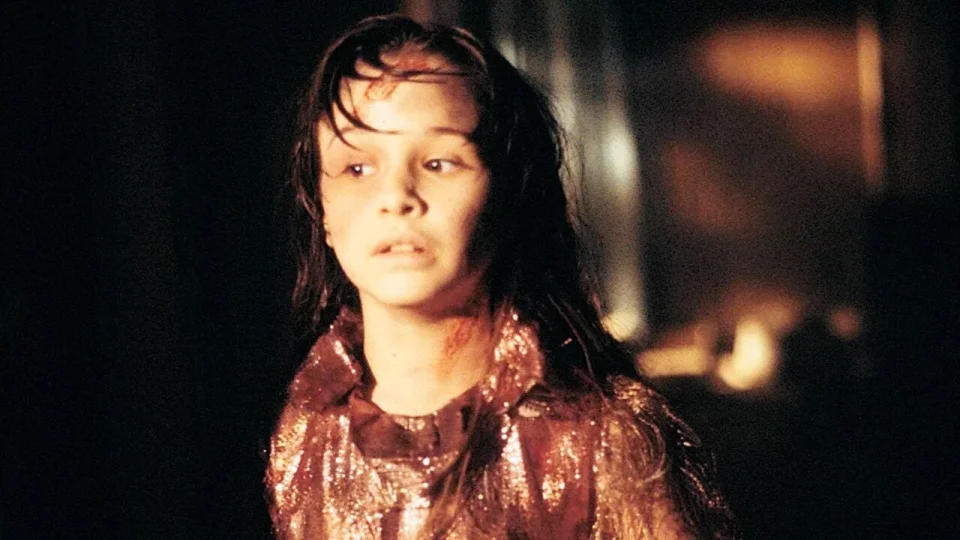
The writers pitched the idea directly to Moustapha Akkad around 2002, before Freddy Vs. Jason arrived. Their story opened with a support group for survivors of horror-movie-style trauma. The group included Kirsty Cotton from Hellraiser and Jamie Lloyd from the Halloween franchise, along with characters connected to other Dimension properties including Critters, Leprechaun, Phantasm and The Prophecy.
Yes, really.
Jamie would discuss the Thorn curse that had plagued her family, while Kirsty represented the Hellraiser side of the equation. The whole thing essentially created a support group for people who had spent their lives being hunted by movie monsters. And then Michael showed up.
Jamie Lloyd vs. Michael vs. Pinhead
The Stolberg and Florsheim pitch was not simply about getting Michael and Pinhead into the same room. The story used Jamie as the bridge between the worlds. Michael’s connection to the Thorn mythology remained important, and the story involved other people becoming targets because of their connection to Jamie’s bloodline.
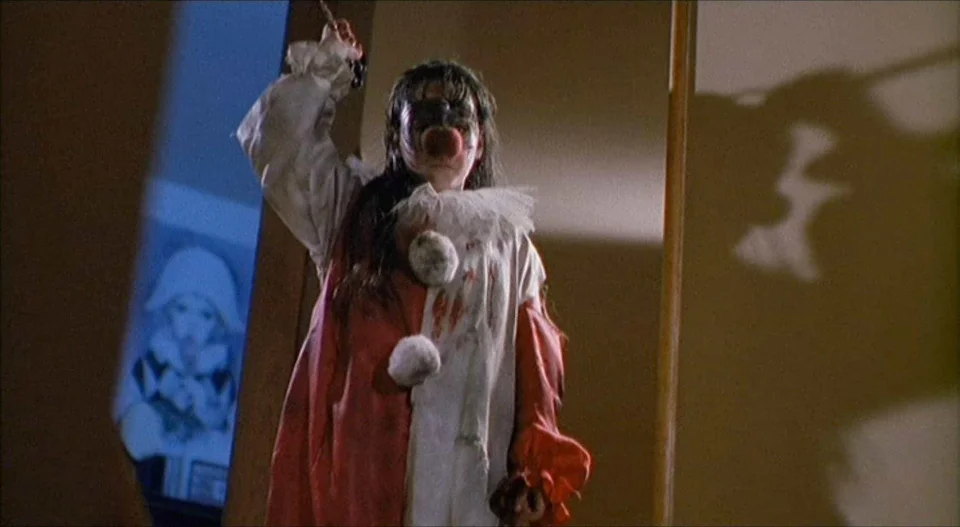
The plot eventually brought Jamie and a young survivor named Betsy into possession of the Lament Configuration. The puzzle boxes became part of a larger plan to trap Michael and Pinhead rather than simply hope that one monster could kill the other.
The final act would send the surviving characters into Hell for the inevitable showdown. And this version apparently went all the way.
According to Taking Shape II: The Lost Halloween Sequels, Stolberg and Florsheim envisioned Michael fighting Cenobites before finally facing Pinhead himself. Jamie and Betsy would ultimately attempt to close the portal to Hell, leaving the two horror icons trapped on the other side.
It was a giant, bloody horror crossover that would have required a considerably larger budget than the usual Halloweensequel. It also had a problem. It was completely insane. Which, frankly, is part of why I wish somebody had made it.
Why Helloween Never Happened
The exact chain of events surrounding the cancellation varies somewhat depending on which person involved was telling the story, but the broad picture is remarkably consistent. Dimension wanted the crossover. The studio had seen what Freddy Vs. Jason had accomplished.
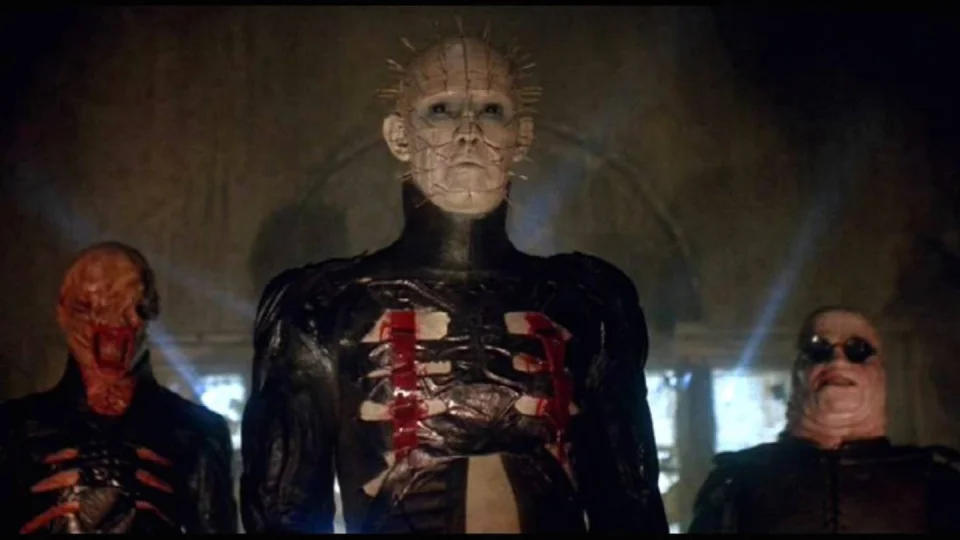
Clive Barker was interested in writing. John Carpenter was being discussed as director. Doug Bradley was excited enough to talk to Barker about it. Multiple writers had developed actual ideas for the crossover. But the people controlling the Halloween property weren’t convinced Michael Myers belonged in another horror universe.
The fan poll didn’t help. And the project eventually died.
That is important because Helloween was never simply a rumor that escaped from the horror-fan internet. There were actual pitches, with actual filmmakers involved. Discussions about making the movie did really happen. Parker’s original pitch even had a title before the studio ever seriously pursued the crossover.
After Freddy Vs. Jason proved that audiences would pay to watch two horror icons beat the hell out of each other, Dimension really did take another look. For a little while, Michael Myers and Pinhead were headed for the same movie. Then the door slammed shut.
What Happened to Michael Myers Instead?
Dimension continued looking for a way forward with Halloween. Josh Stolberg would go on to pitch another sequel, Halloween: Bad Blood, which brought back an adult Jamie Lloyd and used some of the ideas that had developed during his earlier work on the crossover. That movie didn’t happen either.
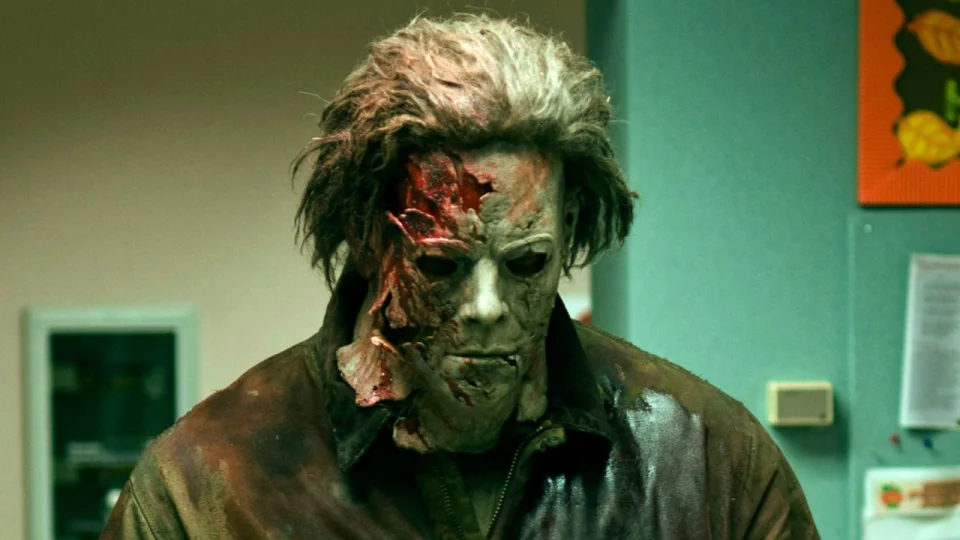
Moustapha Akkad died in the 2005 Amman hotel bombing, and the Halloween franchise eventually went in another direction. Rob Zombie’s Halloween arrived in 2007, rebooting the series rather than continuing the increasingly tangled mythology of the previous movies.
The Michael Myers and Pinhead crossover was left behind. Which may have been for the best. But I can’t stop thinking about that poster.
Michael Myers. Pinhead. Two horror icons staring each other down. And somewhere underneath it all, an executive desperately trying to explain why a six-year-old Michael Myers opening a puzzle box is now the reason the man can survive getting shot six times.
We came dangerously close to living in that timeline. And honestly, I’m a little disappointed we didn’t. There’s also that time Quentin Tarantino thought about turning Halloween 6 into a road trip adventure. But I’ll save that tale for a different time.