
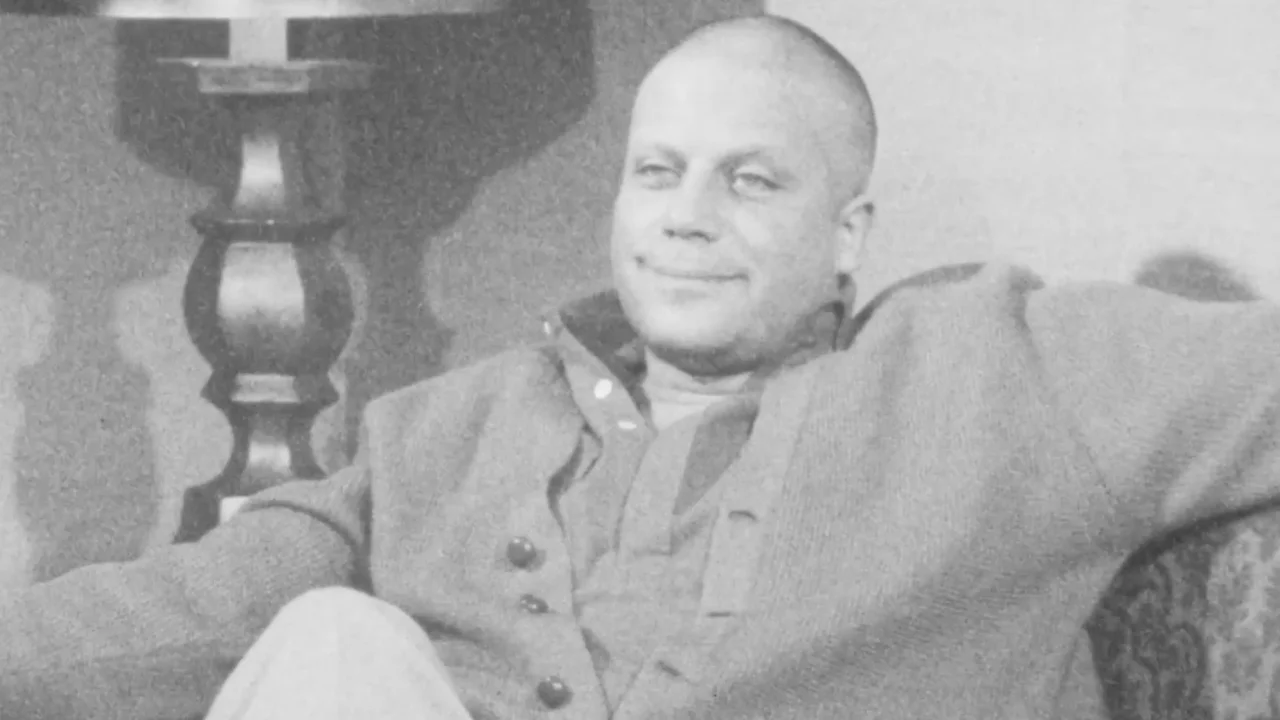
Oliver Reed fans have a new reason to celebrate. A newly surfaced piece of black-and-white footage shows the legendary actor discussing Ken Russell’s The Devils at the end of production, offering a glimpse of the film’s history just as its newly restored, uncensored version continues playing in theaters indefinitely.
The footage was shared by Warner Bros. Clockwork, the studio label behind the film’s new 4K restoration. The clip captures Reed talking about one of the most notorious films of his career, a production that would become a lightning rod for controversy over its religious imagery and uncompromising approach to institutional corruption.
For those of us who can never get enough of Oliver Reed, this is a particularly welcome find. He had a screen presence that could make a character magnetic even when he was being downright terrible, and his performance as Father Urbain Grandier remains one of his defining roles. Getting another glimpse of Reed discussing the film decades after its production feels like a little piece of cinema history has crawled out of the vault.
The Devils was released in 1971, with Reed playing Grandier, a charismatic priest whose influence over the French town of Loudun puts him in the crosshairs of powerful political and religious figures. Vanessa Redgrave co-stars as Sister Jeanne, whose obsession with Grandier helps fuel accusations of demonic possession. What follows is a brutal collision of religious hysteria, political manipulation, and public spectacle, all delivered through Russell’s famously audacious filmmaking.
The film was heavily censored upon its original release, with some of its most controversial material removed. Its reputation only grew over the decades, as viewers and filmmakers continued to argue for the importance of seeing Russell’s intended version. The newly restored cut brings back material that was long missing from public screenings, making the current theatrical run a rare opportunity to experience the film in a form much closer to what Russell wanted audiences to see.
As we reported yesterday, The Devils is now staying in theaters indefinitely after a limited engagement that was initially supposed to last just one week. The release has earned more than $3.3 million at the box office, a notable result for a 55-year-old film carrying an NC-17 rating. Warner Bros. Clockwork has encouraged moviegoers who cannot find a local screening to contact their theaters and ask for one.
The studio’s official movie site has current information about the theatrical release and tickets: thedevils.movie.
Oliver Reed and Ken Russell Made Movie History
The newly surfaced footage is a good reminder of the creative force behind The Devils. Russell had a gift for turning historical material into something confrontational and visually overwhelming, while Reed brought Grandier a mixture of swagger and defiance. Their collaboration produced a film that still has the power to provoke audiences more than half a century later.
Reed was never an actor who needed to smooth out the rough edges of a character to make him compelling. Grandier begins as a womanizer and a powerful local figure, but the political campaign against him forces him into a fight for his own survival. Reed makes him human without turning him into a spotless martyr, which gives the film’s persecution and eventual tragedy much of its force.
Russell’s direction is just as central to the film’s impact. The elaborate compositions and jarring religious imagery turn Loudun into a place where political power and mass hysteria feed off each other. The Devils is outrageous by design, but its anger has a clear target: institutions that manufacture public panic to destroy people who stand in their way.
That is part of why the film has continued to find champions among filmmakers and critics. Its long history of censorship has become inseparable from its reputation, but the renewed theatrical release gives audiences a chance to judge the film as a complete work rather than as a legend built around footage they were never allowed to see.
If You’re Watching The Devils, Watch Women in Love, Too
Since we’re talking about Oliver Reed, I have a recommendation for anyone planning to catch The Devils in theaters: make time for Ken Russell’s Women in Love, too. I just watched it, and it’s a terrific way to see another side of the filmmaker and Reed’s screen presence.
Released in 1969, Women in Love stars Reed alongside Alan Bates, Glenda Jackson, and Jennie Linden in an adaptation of D. H. Lawrence’s novel. The film follows two sisters and the men who become involved in their lives, exploring love, desire, jealousy, and the complicated ways people try to connect with one another. Jackson won the Academy Award for Best Actress for her performance as Gudrun Brangwen.
Russell’s approach in Women in Love is very different from the feverish spectacle of The Devils, but you can still recognize his fascination with desire and the tensions that build when people try to control their own lives or the lives of others. Women in Love is more intimate, with performances that rely on emotional friction rather than the grand, nightmarish imagery that makes The Devils so notorious.
Watching the two films close together also makes Reed’s range stand out. He can be charismatic and difficult, tender and volatile, often within the same performance. In The Devils, that magnetism becomes part of the tragedy surrounding Grandier. In Women in Love, it plays out in a different kind of emotional battlefield. If the theatrical revival has you curious about Russell’s work beyond his most controversial film, this is an excellent place to go next.
For now, though, the new footage is another reason to keep The Devils in the conversation. The film has moved from a once hard-to-see cult classic to a theatrical event drawing audiences decades after its release. And with the uncensored 4K restoration still playing in cinemas, there’s a chance to experience the movie as Russell intended, then follow it with Women in Love for a fuller picture of what he and Reed could do together.