In the immortal words of June, Paul and Jason, what we have here is a true Jacob’s Ladder scenario. It’s not often that I get to spoil a movie for people after they’ve seen it. But most audiences will be so emotionally drained by the end of David Ayer’s new Alaskan adventure thriller Heart of the Beast, they might miss what it’s really about. Because at the heart of it all, this is a true horror movie in every sense of the word.
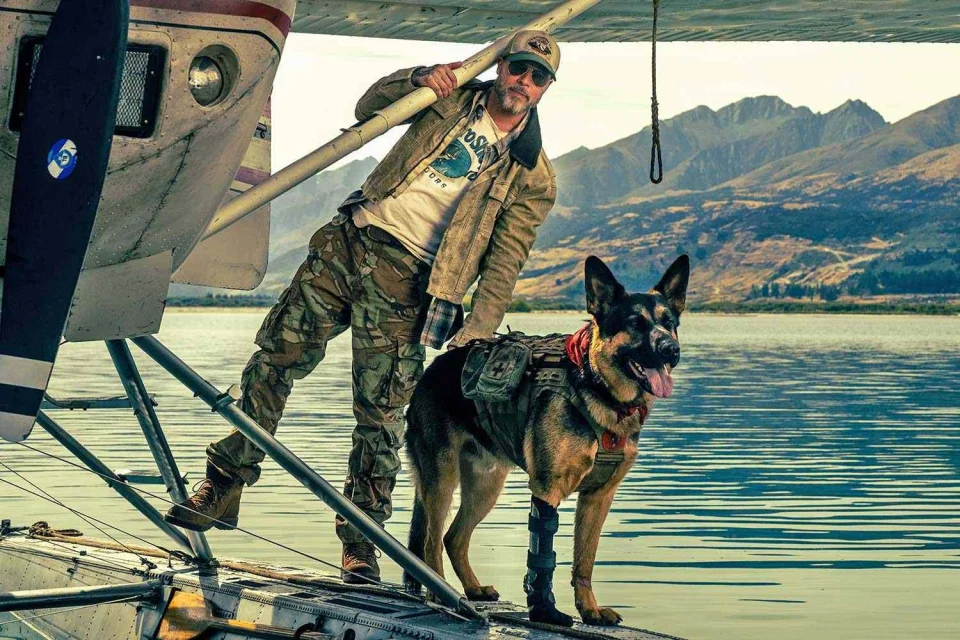
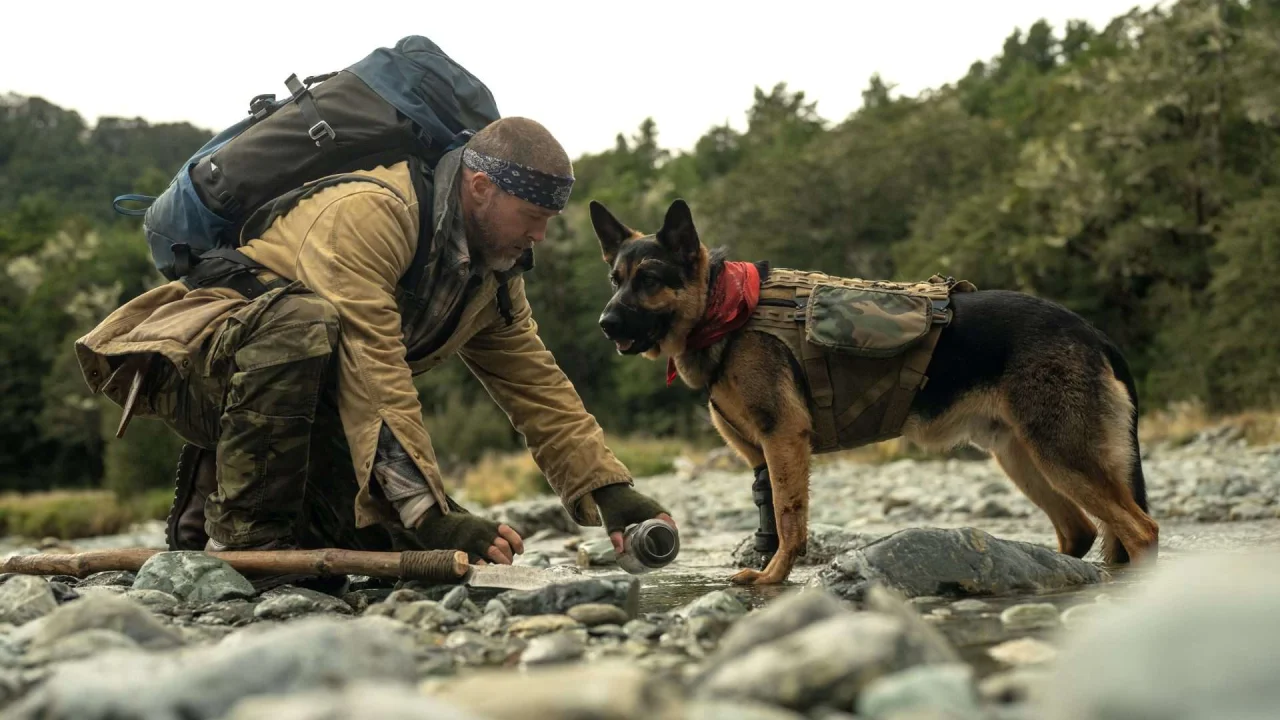
Heart of the Beast tore my heart out, and I’m still thinking about what transpired in front of me over a week after enduring the plight and peril of its two lead characters Odin, a soulful, battle-weary combat German Shepherd, and his best pal James Belmont, a retired Army Special Forces veteran struggling with severe PTSD, played by Brad Pitt.
I recently lost my best pal in the world, a scrappy little mutt with the tenacity of a Teflon water bear, so of course this movie reached under my ribcage and squeezed my guts into a tight ball. I don’t want to spoil the deeper plot twists, but the opening minute reveals that the dog does in fact live. Which seems to be a selling point for at least a majority of the paying audience.
But let me tell you up front, just because the dog lives doesn’t mean this isn’t one of the saddest experiences I’ve endured in years. I’m fighting back tears as I type this, but it comes from some recent personal PTSD. Throughout watching it, I did not quite understand that I was enduring a true horror movie. And I don’t just mean that in a metaphorical sense.
Up front, yes, David Ayer’s Heart of the Beast could be labeled survivalist horror. It’s a quiet film, filled with perilous moments. Some of which are heart stopping. The premise seems quite simple at first. James and Odie are on a relaxing camping trip in the Alaskan forest, drinking Belgian Brown Ale in a secluded oasis. But after James suffers a heart attack, the two pals must fight like hell to make it back to civilization.
It’s a thrilling drama on its face, but it’s also nature horror and a killer animal movie to boot. There is a wolf pack scene that is still haunting me. But none of that is what compelled me to look at the film a bit deeper. Pushing all that aside, what a lot of people seem to be missing, and I know because I’ve asked, is that this is actually a supernatural horror flick based somewhat on Greek mythology.
David Ayer has hidden this on the surface. It’s right there for the eye to see. But because this is a Brad Pitt dog movie, general audiences aren’t necessarily paying attention. It’s almost like watching The Sixth Sense and not understanding its twist ending until two days after you’ve seen the movie.
It wasn’t until maybe an hour or two after watching Heart of the Beast that I truly began thinking about its deeper meaning. There aren’t too many characters aside from James and Odin. But one person stood out. That’s J.K. Simmons, who plays a friendly Alaskan mountain man that stumbles upon James and his dog out in the middle of nowhere.
At first sight, he seems to be one of those bothersome strangers who interrupts your quiet night alone with your best friend. Too chatty. Nice, but totally a dork. James and Odin, who both suffer from PTSD and major battle scars, both physical and emotional, are very weary of this guy called Watkins. But after a while, James warms up just the tiniest amount to offer Watkins one of his precious Belgian Brown Ales, of which he has a cooler full.
Watkins leaves James and Odin before the sunrise, crossing the Alaskan river in a very unique boat adorned with a giant buck skull. I thought it was weird, but then just assumed Watkins was being set up to return later in the movie, perhaps to save James or Odin in the nick of time in the third act.
But Watkins doesn’t return. And that’s when, maybe a day after seeing it, I realized I’d been watching the entire movie wrong. J.K. Simmons isn’t just some jolly mountain man. He is actually an allegory, if not the straight up embodiment of Charon, the ferryman of the dead from Greek mythology.
I asked the internet if this was correct. And yup. Watkins is meant to be interpreted as such. It’s just done in such a clever way, that dimmer bulbs such as myself, who are too emotionally wrapped up in James and Odin’s plight, miss this the first time around.
Beer Is the Toll
Watkins might be presented as a friendly Alaskan mountain man. But Ayer has embedded several very deliberate, symbolic clues that directly point to the Charon myth. First up we have the payment, or what is otherwise known as the Obolus. Charon always requires a coin to ferry souls across the River Styx. That’s where the beer comes in, with Brad Pitt’s precious Belgian Brown Ale turning Heart of the Beast from an average Alaskan wilderness thriller into a true Greek horror flick.
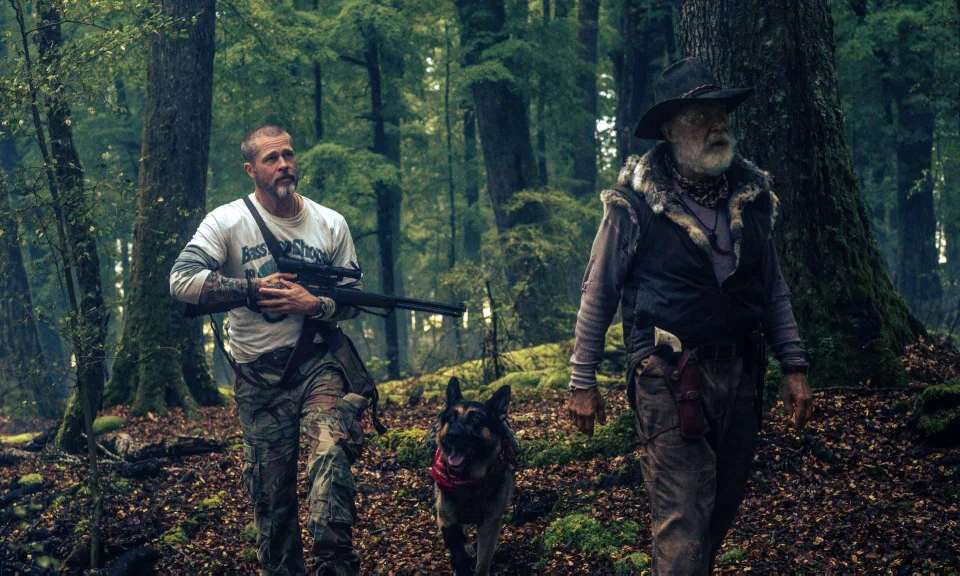
While Belmont offers the first bottle of Ale as an act of free will, we later understand that Watkins is specifically interacting with James in exchange for a toll, which is the second bottle of beer that he takes from the cooler. After “borrowing” this precious “obolus”, we see Watkins exit the narrative on a rickety homemade canoe that crucially features a deer skull mounted on its stern. Upon first sight, the ominous raft heavily evokes a harbinger of death. It is unmistakably an underworld vessel.
It feels off. A little weird. At first glance, it’s like, “What is this horror imagery doing in this otherwise thus far innocuous drama?” It’s not until after the final moments that we can look back and go, “Oh, I just watched a straight up horror movie about traveling through the 9 levels of Hell.”
Yes, it seems that James and Odin might already be dead by the time Watkins arrives in their lives. That is up for debate. But the rest of the narrative shouldn’t be. It’s clear from this point on in the story that Brad Pitt is now attempting to traverse the dreaded ‘Valley of Death’ crossing. Immediately after Watkins leaves, James and Odin are faced with a tsunami of terrible mishaps that include a horrific storm, a heart attack, a seaplane crash and a grueling trek across treacherous terrain.
Once we know that Watkins is, in fact, a stand-in for Charon, we understand that the landscape around James and Odin is the valley of the shadow of death. And that they are in the underworld itself. So yeah, if you’ve made it this far in my story, I guess you can say that the dog dies too. But you don’t have to tell Aunt Joyce that. Just keep letting her believe the dog lived.
If you need further proof that Watkins is Charon, just look at the final message he leaves behind when he takes a second beer for “payment.” It’s what is known as “The Final Message”. Before rowing away into the darkness of early morning, Watkins has seemingly traded a book with a highly specific, deeply relevant passage that he’s highlighted. This will soon act as a thematic roadmap for what is about to transition. We will soon watch James suffer a most desperate struggle as he ensures Odin is cared for. In other words, he trades his soul to Hell to ensure that Odin goes to heaven. At least that’s how I’m believing to interpret it. Gosh darn it, now I’m crying all over again.
The Belgian Brown Ale That Tells Us Who James Is
Heart of the Beast is a true onion of a movie, the more you peel away, the more my eyes well up and turn red. Reading other thoughts on the narrative, it becomes clear that a lot of critics interpret Watkins as a literal ghost. Some believe he is just a hallucination brought on by James’ severe trauma. Maybe he’s just a thematic echo.
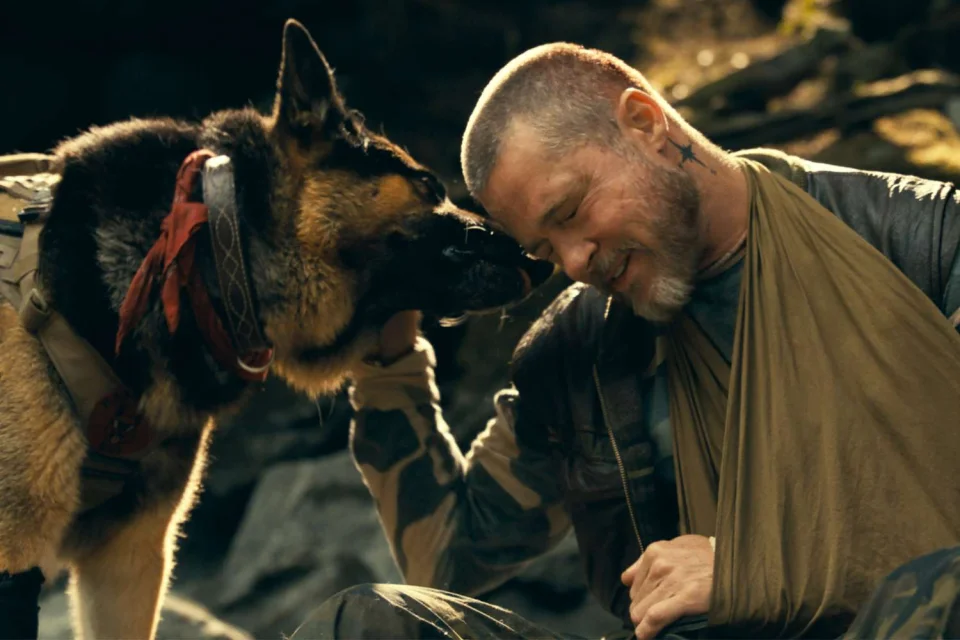
But you can’t deny that the structuring within the story positions him as the spiritual ferryman Charon guiding James through his final threshold. With the combat scenes interwoven throughout the narrative, it becomes clear that James and Odin possibly died during combat, if you want to interpret it this way. Which makes this a much better remake of Jacob’s Ladder than the actual reboot proved to be.
Now let’s look at that beer which turns this from a drama into a true horror movie. Brad Pitt calls his Belgian Brown Ale the tastiest in the world. The brand he is drinking in the movie is actually Chimay Blue, a widely distributed Belgian Trappist ale that can be found wherever fine beer is sold all across the country.
James has bottles packed in his camping cooler, a taste he picked up during his years serving overseas. The beer actually tells us something about James. Before the crash that leaves James and Odin stranded in the Alaskan wilderness, they are already living like a pair who’ve pulled themselves away from the rest of the world. During the early camping scenes, Belmont opens one of his Chimay Blues and raises it to the soldiers he lost.
This isn’t just a guy drinking a fancy beer in the woods. The beer becomes part of James’s ritual for remembering the people who aren’t there anymore, and another indication of how badly his PTSD has shaped his life. There’s also something interesting about the fact that it’s a Trappist beer. These beers are traditionally brewed by monks inside abbeys, with the whole process built around a very particular way of life that is ensconced in discipline and isolation.
James isn’t exactly living in a monastery, but he has essentially created his own version of one. He’s withdrawn from society and chosen to live alone in the wilderness, carrying the weight of his past with him. That isolation becomes even more apparent when James encounters Watkins. He is so guarded that he won’t even shake the man’s hand. But eventually, he does something much more meaningful than that. He shares one of his precious beers with him.
For someone as closed-off as James, handing over one of those bottles becomes a rare gesture of peace. And it shows the utmost respect to someone, or something, we will much later come to identify as the harbinger of death.
Director David Ayer has spent much of his career exploring complicated versions of military masculinity, from Fury to End of Watch, so the choice of Chimay Blue fits what he’s doing with James. Ayer wanted the character to feel like an actual veteran rather than another Hollywood action hero who automatically reaches for whatever generic American beer happens to be sitting nearby. This ain’t no Budweiser movie (no disrespect to Bud, I drink it all the time, but if you’re going to share a drink with a mythological Greek demon, make it something special).
James has spent years deployed overseas, and his taste in beer reflects that experience. It’s a small detail, but it gives him another layer. James is gruff, heavily tattooed and not particularly interested in talking about his feelings. Then you discover the guy has a cooler full of some of the world’s most respected Trappist beer. That becomes a much more interesting character trait than the standard “tough guy drinks beer” cliché. And it basically embodies what we see in the movie. Belmont may look like a certain thing on the outside, but he, too, is quite layered in ways we might not expect.
Apparently Brad Pitt was pretty happy with the choice, too. During the film’s promotion, Pitt enthusiastically praised the Belgian beer, reportedly telling the filmmakers and Belgian press, “You Belgians have the best beer.“
If you are thirsty for a Belgian Brown Ale walking out of the theater, know that it is a Chimay Blue in Heart of the Beast. But also know that it isn’t just there because somebody thought Brad Pitt needed a nice beer while camping. It tells us who James Belmont is, where he’s been, what he’s lost and, perhaps most importantly, how he remembers the people who didn’t make it home.
Losing my dog this past year has been one of the hardest things I’ve ever gone through. I thought Heart of the Beast might be a tough watch. But after inspecting it for deeper meaning, it serves as quite a cathartic experience. Stepping away from it, and looking from a distance, I now see that it is a true horror movie about death and ascending through the afterlife to achieve eternal peace.
Is J.K. Simmons really playing Charon in the movie? I say yes. But it’s up for interpretation just like anything else. Even if you are a horror buff who’d usually be turned away by something like Heart of the Beast, give it a shot. There is a gnarly bear scene, broken bones, and that wolf attack is one of the most harrowing moments ever committed to film.
Maybe I just like it because Odin gets his true Nanook moment. And I am a sucker for anything that is The Lost Boys adjacent.