
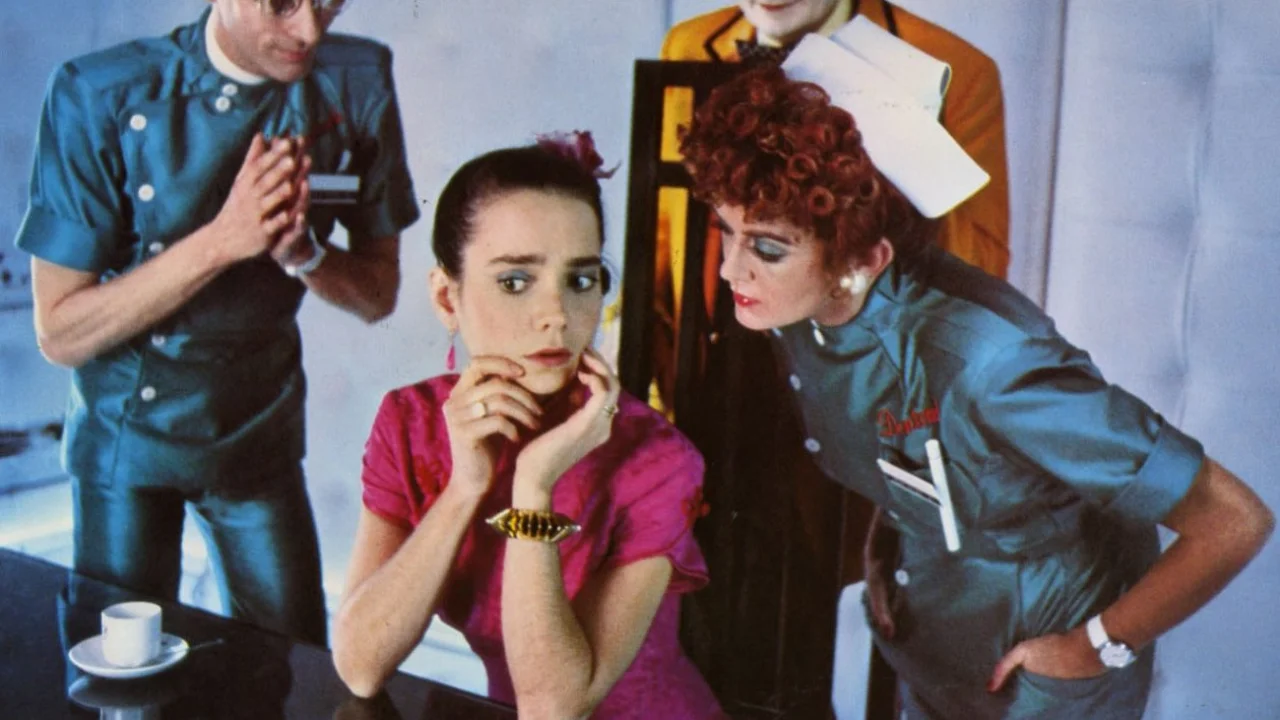
Shock Treatment predicted the reality TV nightmare we’re currently living in. But way back when it was released in 1981, audiences just weren’t ready for Denton yet.
I certainly wasn’t.
This strange and often randy movie musical has always kept me perplexed. Maybe even obsessed. I wasn’t sure what to expect the first time I watched it several years ago. Now that I’ve seen it several more times over the years, I’m still not sure what to make of it. But something keeps driving me back into its filthy, electrified arms. It’s like an itch I can’t scratch. Thing is, I’m not sure I necessarily enjoy the experience.
I can clearly see why it bombed at the box office.
Everyone wanted Rocky Horror 2.
They wanted Tim Curry to return as Frank-N-Furter. He was nowhere to be seen. The songs just weren’t as catchy as those in the original. And where the heck was the original Brad and Janet? I just kept asking over and over again, “Who are these interlopers?” Like, isn’t that the girl from Phantom of the Paradise? What is she doing here? She looks nothing like Susan Sarandon. And why is the guy from Carnosaur 2 playing Brad? I’m so confused.
Turns out, I’m not the only one who felt this way.
A simple fact: Way back in 1981, this is not what audiences were expecting. At all. Fans desperately wanted another excuse to throw themselves headfirst into the gloriously unhinged midnight madness that is The Rocky Horror Picture Show. Instead, original creators Richard O’Brien and Jim Sharman thought it would be a funny idea to give us something totally different called Shock Treatment. A movie where an entire town is basically one giant television studio.
Audiences threw up their arms in confusion, wondering loudly, “What the hell is this?”
Who can blame them? I don’t think there’s a single song that ever has me jumping out of my seat quite the way Time Warp does. The whole thing is hard to dance to. These songs aren’t the easiest to sing along to, either. It takes a lot of listens. Worst of all? The core trio that made the original such a hit are no longer present. Utter blasphemy. It’s really the worst thing a sequel can do. I mean, just look at the fate that befell The Flintstones in Viva Rock Vegas. Indigestible.
A lot of Rocky Horror fans have turned their backs on it for years because it has almost nothing to do with the original cult experience we’d all fallen in love with. To be fair, they have a point.
Shock Treatment is a weird and messy slice of bizarre bewilderment that perfectly upholds the geek nature of a carnival sideshow. Despite sharing its two main characters, it in no way behaves like a conventional sequel. Audiences hurried into the theater expecting another Rocky Horror ride. They left with lowered heads, wondering if somebody had accidentally switched the film reels.
All these years later, it still has never gained the same midnight movie traction the original Rocky Horror enjoyed. Instead, it’s been written off as a redheaded stepchild (no offense to my ginger brethren out there). This was the perfect lesson in how NOT to build a lucrative franchise.
Even now, Shock Treatment has a complicated reputation. Sure. It’s fair to say that it’s finally come into its own as a cult oddity. But you’d be hard-pressed to conjure up five friends who’ve actually seen it all the way through. Shock Treatment never gets the same revered love at revival houses as its predecessor. You never see it playing famed repertory barns like Vidiots’ Eagle Theatre in Eagle Rock, or The Whiteside Theater in Corvallis. Maybe New Beverly shows it on occasion? But blink, and it feels like decades between showtimes.
This thing is beyond reproach.
Or is it?
Upon my last viewing, I had a long, hard think about the whole shambling operation. And I realized it’s kind of a small miracle. I mean, look at what the movie is truly about: People desperately wanting to be on television.
That’s us. Today. Clamoring for the tiniest bit of attention on socials. We all want to be stars, from the cool club kid living in squalor on Hollywood Blvd. to someone like me, an old dude thriving in the dust of his dead pet, residing inside a fifth-wheel on his ancient parents’ lawn. It doesn’t matter. Turn on that little device in our hand and we’re all superstars to a world that doesn’t want any more of us.
Shock Treatment, at its core, is about the art of being manipulated for entertainment and ad dollars. We’re all performing versions of ourselves for a worldwide audience. Just like Brad and Janet did four decades ago. In their world, celebrity is the ultimate prize. When this “sequel” was released, not a single audience member hoping to revisit the jubilant glory of Rocky Horror realized just how prescient this cultural artifact would become over the next five decades.
Who could have guessed this thing would ever look less like a failed attempt at Rocky Horror 2 and more like a particularly deranged preview of the entertainment nightmare we’re all living through right now?
Maybe it’s okay that Shock Treatment didn’t make a lick of sense on opening day? It’s been made abundantly clear that audiences just wasn’t ready for Denton yet. Perhaps that’s why it keeps resonating the further we get away from its original sell-by date.
Denton Is Content
Watched through this widening viewpoint, Shock Treatment becomes truly fascinating. Denton isn’t merely some weird place where the plot happens. It’s an absolute state of being. Denton is the current hellscape we are all trapped inside today. Even the revolving cast makes more sense now. This isn’t the Brad and Janet we once knew. It’s another amalgamated version of the same personas we keep doomscrolling past on TikTok. Similar people, slightly different faces, all clamoring to catch that brass ring of AdSense, just to keep a pot of Skyline chili burning on the stove.
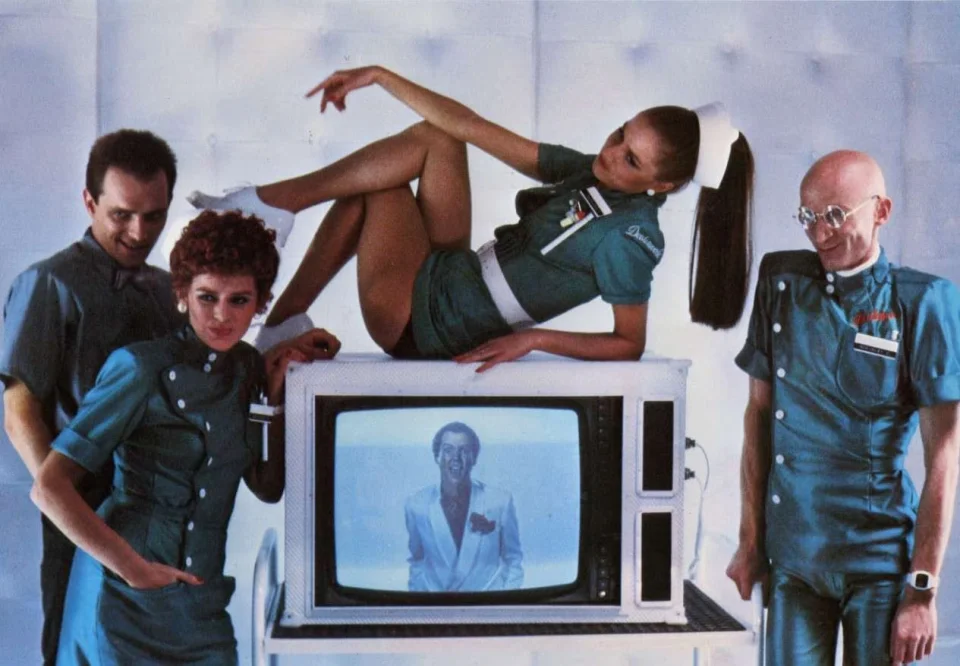
It makes so much sense now … I’m starting to get a stomachache. Doing a deep dive into the film’s dusty backstory, it appears I’m not wrong, either. That intent was always there.
The original production notes describe the entire film as taking place inside a television studio, with the residents of Denton acting like characters in a TV series that have completely escaped their cages. Brad and Janet don’t just wander through this strange “town.” They’re being dropped into one television program after another, from game shows to soap operas, all while the people around them behave as though this is perfectly normal. Just another day. Just another episode. It’s like when we were trapped watching reruns of Gilligan’s Island as a kid on KPTV Channel 12 after school. It’s entertainment as a form of corporal punishment.
That was the joke in 1981. It’s not nearly as funny now because we’ve spent the last couple decades turning this conceit into the new normal. Shock Treatment isn’t really predicting TikTok. That’s too easy. You could slap that headline on just about anything made before smartphones and call it a day. What Richard O’Brien and Jim Sharman understood was something much deeper: People like being watched. It’s basically an essay on the peeping tom every movie turns us into. Call it: The art of voyeurism.
Television figured that out a long time ago with its abundance of various talk shows and long-running game shows. Then, sometime in the mid-90s, reality TV took the idea and truly turned ordinary people into programming. Starting with MTV’s The Real World and continuing today with far too many shows to even count. That brings us to our modern era of static misery. You don’t need to be some attractive actor to land on television. You just need the tiniest bit of personality and an iPhone. The willingness to let strangers watch your life unfold through one calamity after the next will do the rest.
Social media arrived like an atomic bomb dropped on all humanity. It moved the TV studio from beautiful Burbank, California directly into our collective back pocket. Every phone has a camera. YouTube gave everybody a channel. Instagram turned vacations, meals, relationships and increasingly questionable bathroom selfies into broadcast material. TikTok turned a person sitting in their car, slurping up the latest beverage from Dutch Brothers into appointment viewing. It’s become a chronic form of madness. It makes my tooter hole itch.
Livestreaming took everything one step further. Now people could broadcast themselves in real time to thousands, sometimes millions, of strangers who can not only watch, but also react while becoming part of the performance as it’s happening. That’s the part of Shock Treatment that feels strangely modern. Denton isn’t simply consuming television. From the audience to those on stage? They want to become television.
Janet discovers that being on TV is intoxicating. Farley Flavors understands that television can manipulate people while making that manipulation entertaining. The residents of Denton have essentially stopped separating everyday life from the programming being fed to them. The production notes even described the movie as a world where media influence has become so pervasive that “the whole world is just one big TV show.”
Sure, in 1981, that was a wonderfully ridiculous premise. Today, it’s a little harder to laugh at. We’ve spent decades turning our lives into programming, deciding what parts of ourselves are worth broadcasting to an ever-widening audience. Sometimes consciously and sometimes not. The truth is, we all behave differently when we know somebody is watching our every move. Just as Brad and Janet are not really the people they ultimately become, neither are we.
The technology and screens keep changing while the audience continues to grow bigger. Through it all, that basic yearning is still there, scurrying across our skin. It’s never been afraid of the light.
Watch Me
I don’t have to make the argument that Shock Treatment was ahead of its time entirely by myself. Richard O’Brien eventually made it for me. In a later interview, O’Brien described Shock Treatment as being about people living inside a television studio where the prize was celebrity and fame. He also pointed to Big Brother and The Truman Show as examples of the culture the movie was already playing with decades earlier.
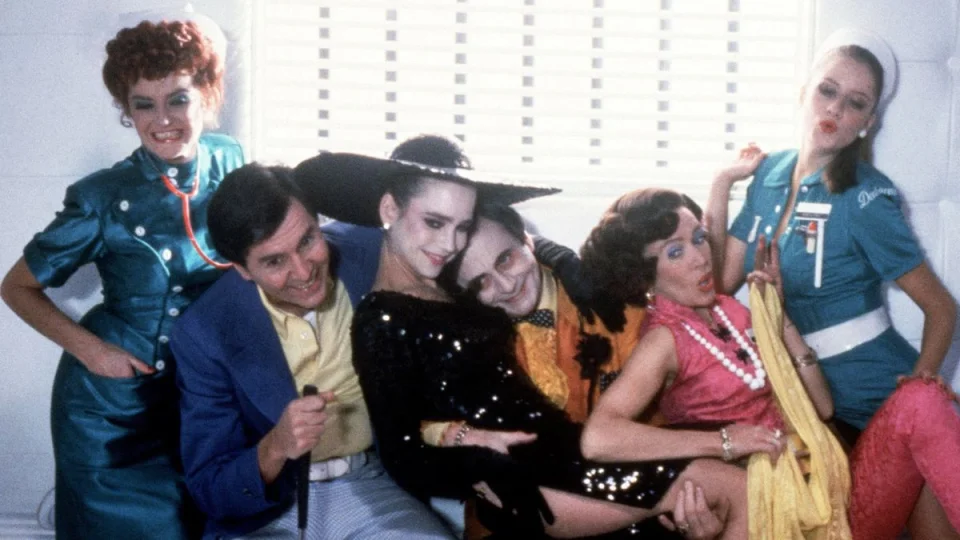
Then Jim Sharman went even further. In a conversation with the National Library of Australia, Sharman explained that the idea of turning Denton into one giant television studio came out of the production itself. He later described the movie as essentially inventing reality television decades before it became a recognizable genre, adding that they were about 30 years too early and that audiences were pretty horrified by what they saw.
That last part is important. Because Shock Treatment wasn’t sitting around in 1981 going, “One day people will have TikTok accounts.” They didn’t know TikTok was coming. Nobody did. They were looking at television itself and asking a much stranger question: What happens when people stop watching television and start wanting to live inside it?
The answer was Denton.
And maybe that’s why the movie feels so strange even now. It’s not really about television as a piece of technology. It’s about celebrity as currency. People accepting the camera as part of everyday life. Entertainment becoming so pervasive that eventually there’s no obvious line between the audience, the performers and the show. That sounds pretty ridiculous for a movie released in 1981.
But it doesn’t sound ridiculous at all now. It sounds like the very definition of normal.
The fact that O’Brien and Sharman eventually looked back at Shock Treatment and recognized Big Brother and The Truman Show in its DNA makes the whole thing even more fascinating. They were watching us become the audience. They weren’t really concerned with the technology that got us there. It’s like they wanted to trap us inside the screen, and leave us there, encased in lines of scrambled transmission.
Maybe We Were the Problem
Let’s turn this knife a little to the left. The most interesting thing about Shock Treatment isn’t that it was secretly a masterpiece and everyone in 1981 was too dumb to understand it. I’m not sure Shock Treatment is a masterpiece. Many of its deepest aspects are hard for general audiences to even understand in this day and age. Let’s just call it what it is: Chinese Arithmetic (and no, I’m not talking about that rap song by Eric B. & Rakim).
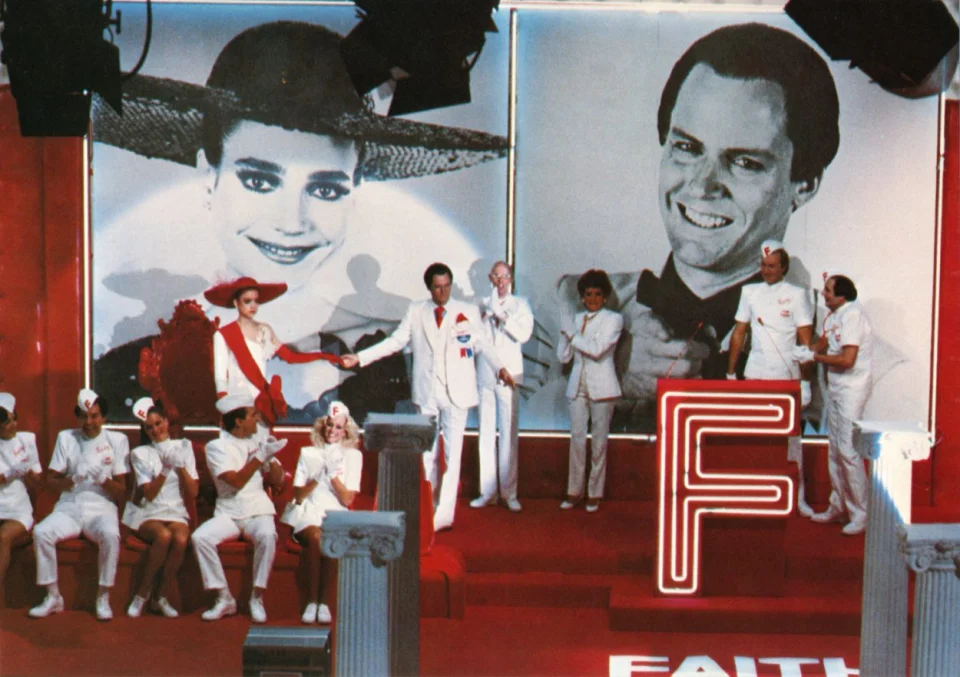
There are moments when the movie feels like it has a fantastic idea desperately trying to escape from a plot that doesn’t always know what to do with it. The story feels thin. Some of the characters are more interesting as concepts than they are as actual people. If you go in expecting the manic, anything-goes insanity of The Rocky Horror Picture Show, there are stretches of Shock Treatment that can feel downright frustrating. It’s often a trudge. And did I mention the songs aren’t very good? Yes, I did. Look, man. There isn’t a mainstream ditty in the mix. Some of the lyrics don’t even rhyme (that’s a joke, calm down).
Modern reassessments haven’t exactly settled the argument when it comes to Shock Treatment. Some critics still have problems with the narrative and the movie’s strange structure, while others have embraced the very things that once made it such a difficult follow-up to Rocky Horror, like its bizarre energy and absolute refusal to give the audience the sequel they thought they wanted.
Honestly?
That’s better for us.
We don’t need to pretend Shock Treatment is a misunderstood masterpiece. Maybe it failed because it was bad. It’s quite obvious, even today, that audiences didn’t want what it was selling. In part, it failed because it was asking people to watch a movie about television addiction at a time when the idea itself was still pretty damn weird. Gen X kids were the ones becoming obsessed with the small screen. And this was a very adult movie. It was sort of built to only be truly understood some four decades after its release.
Now, think about what first-time paying audiences were being asked to accept. A town where television isn’t just entertainment. It’s practically the entire culture. People desperately wanting to be on camera. Celebrity is king. Ordinary life gets swallowed by programming. And the worst part of it all? Everyone is perfectly happy to sing and play along.
Back in the day, this was considered satire. Now, it’s just another Tuesday swiping right in your car on a lunch break from a dead-end job. This has become the part of Shock Treatment I find so much more fascinating than trying to declare it any type of masterwork of cinema. I don’t want to get laughed off Letterboxd. The movie didn’t need to get everything right. It just needed to be looking in an interesting direction.
Maybe, just maybe, Denton looked so ridiculous to original audiences because, in 1981, we hadn’t built the world it was clobbering us over the head with.
The Rocky Horror Problem
This is where the Rocky Horror problem comes roaring back. Shock Treatment had an almost impossible burden before it ever reached any theater. The Rocky Horror Picture Show had become a full-blown cult phenomenon by this time. It wasn’t just a successful movie anymore. It had midnight screenings and audience participation that turned it into an event for fans of all ages. Almost like the Denton audience participates in cheering on the televised life of Brad and Janet 2.0.
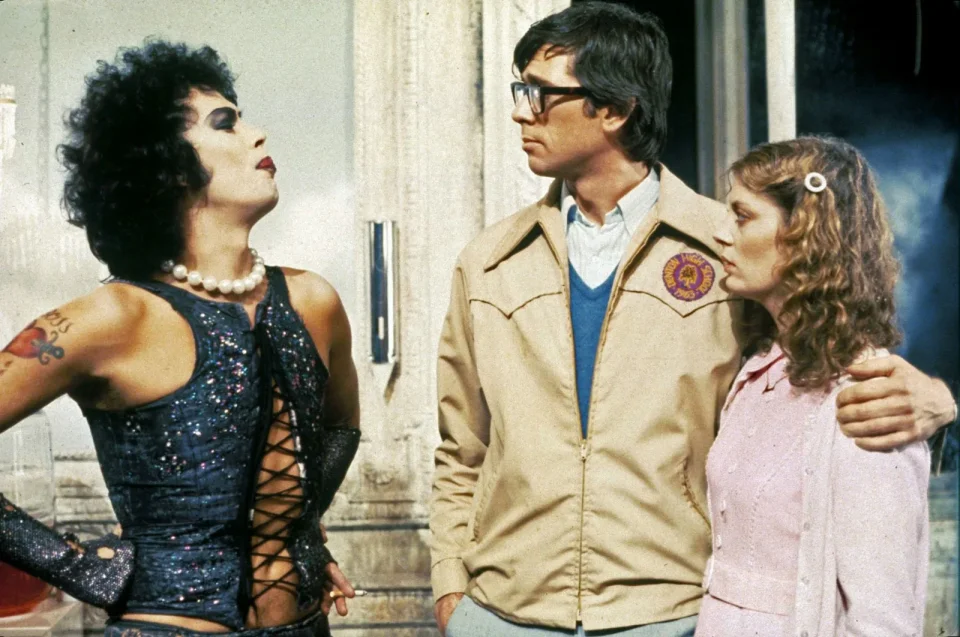
So naturally, when word got out that there was going to be another one, people wanted Rocky Horror. Shock Treatment gave them almost everything except that.
No Tim Curry.
No Susan Sarandon.
No Barry Bostwick.
Brad and Janet were now being played by Cliff De Young and Jessica Harper. The movie wasn’t a continuation of the story audiences were expecting, either. It was something considerably stranger. It never even addresses what kind of emotional impact Dr. Frank-N-Furter had on Brad and Janet’s sexual life post-tryst visit to the Frankenstein Place.
The movie’s own history shows how much of an identity crisis was happening behind the scenes. The project was originally developed as a true sequel called Rocky Horror Shows His Heels, which would have resurrected Frank-N-Furter for the further musical adventures of this Sweet Transvestite. But Tim Curry balked at this idea, and Jim Sharman was also resistant to revisiting the original concept so directly.
That sent Richard O’Brien into a mad scurry to scrap his original idea and come up with a different script under the wonderfully blunt title The Brad and Janet Show. Hoping to show off Tim as a more versatile actor, he offered our dear future Pennywise the dual role of twin brothers Brad Majors and Farley Flavors. That casting failed to materialize, with Curry instead taking on the DJ role in Times Square before showing off even more musical skills as Rooster Hannigan in the big-screen adaptation of Broadway hit musical Annie.
Refusing to recast Frank-N-Furter, Richard O’Brien had to course-correct hard, coming up with a story solely built around Brad and Janet, which took Shock Treatment in a totally unexpected direction. Though he wasn’t without a bit of connective tissue. Jeremy Newson was the sole actor to reprise his role from the previous film, once again playing Ralph Hapschatt, whom we see getting married at the beginning of Rocky Horror, only to discover that he’s gotten a divorce and is now dating a Denton news anchor in Shock Treatment.
Richard O’Brien, who most famously played Riff Raff, gives himself the prime role of Cosmo McKinley, a man who poses as a neuro-specialist doctor at the Dentonvale mental hospital. O’Brien’s character would dominate the press material, appearing on the theatrical poster to assure fans that this was somehow still connected to the original movie. He even brings along original Magenta actress Patricia Quinn as his on-screen sister Nation McKinley, and the original Little Nell returns as Nurse Ansalong.
The only other two returning Rocky Horror cast members were Criminologist/Narrator Charles Gray, who was now taking on the role of Judge Oliver Wright, and Transylvanian party extra Imogen Claire coming in as the Wardrobe Mistress. This did little to right the sinking ship. They were all playing totally different characters, in different makeup. With the exception of the distinctive-looking Richard O’Brien, general audiences didn’t even recognize that these were some of the same players.
All said and done, Twentieth Century-Fox had no clue how to sell this crazy thing to the rest of America. According to the AFI Catalog, Fox was concerned about how to reach a mainstream audience and planned test marketing in Fresno, Houston and Calgary to help determine how the movie should be released nationally. They came up mostly empty-handed.
Fox didn’t want audiences walking into a blank slate. That’s why Richard O’Brien’s piercing mug, illuminated in a threatening red hue, was plastered throughout subway tunnels and theater hallways, set against a familiar hum. His image alone had to carry the enormous radioactive expectations of Rocky Horror. An impossible task.
Imagine being a Frank-N-Furter fan in 1981. You hear there’s a new movie from Richard O’Brien and Jim Sharman. You know it’s connected to Rocky Horror. But you only see Cosmo McKinley’s smiling face staring back at you from underneath the marquee. It surely left even the most blasé viewer with a ton of unanswerable questions.
Frankly (pun intended), the marketing materials went beyond unsettling. They were stomachache-inducing. The poster alone promised nothing but a bad time. Sure, it boldly proclaimed “From the Creators of the Rocky Horror Picture Show,” but there was no indication that this was even a sequel. Instead, the tagline just reads, “Trust Me, I’m a Doctor.” As though we should be preparing for the worst colonoscopy of all time.
Even with Brad and Janet in the mix, audiences weren’t ready. Expectations had fans yearning for another Hot Patootie. Instead, they got hard-to-sing-along-to ditties like In My Own Way and Lullaby. Sure, the ensemble theme Denton, U.S.A. is a banger, and Bitchin’ in the Kitchen has a familiar stank to it, but none of the musical interludes carried the same electricity that made Rocky Horror such a memorable experience. It suffers from the sophomore slump hardcore. This was akin to The Stone Roses’ Second Coming. Or U2’s October. Yeah, it was totally like that time Hootie and the Blowfish gave us Fairweather Johnson. It’s still giving me douche pimples.
Let’s face the cold, harsh facts. Everyone wanted the further sexual misadventures of a space alien turned mad scientist. This follow-up sneers at every single fan, proclaiming, “What if, instead of a transexual extraterrestrial trying to conquer Earth, we have a television eat an entire town?” That’s a tough sell when we all just really wanted to do the Time Warp again. Right?
Standing at this precipice, the title of this whole argument makes way more sense now. I don’t think anyone was too stupid to understand Shock Treatment when it initially hit theaters. We were just expecting a completely different movie. And we had no idea its themes and ideas would be so predictive.
We Weren’t Ready for Denton
Watching Shock Treatment now doesn’t make more sense because the entire entertainment landscape changed. It’s because we, as a society, have evolved into the very thing this movie is warning us about. Whether it accomplished that doomsayer message or failed, it’s slathered onto the text like a thick layer of day-old mustard.
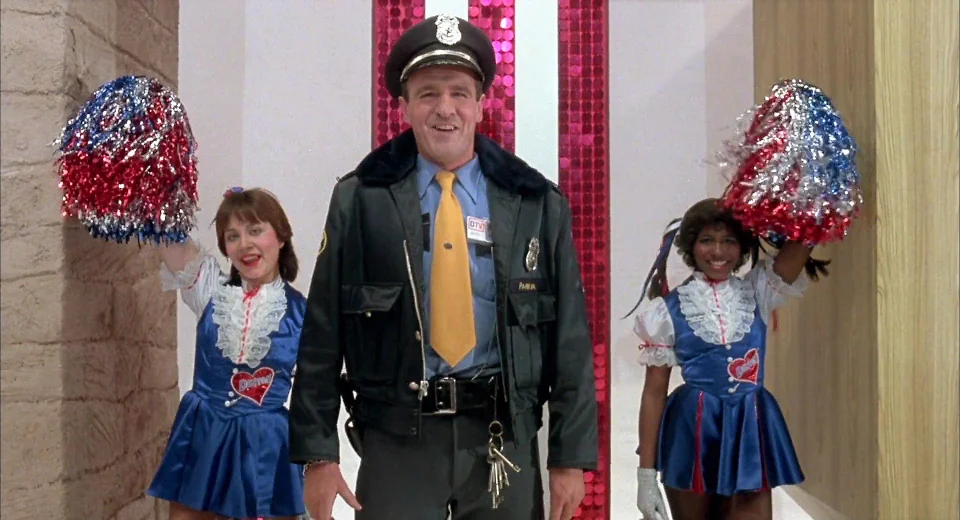
Sure, way back in 1981, Denton may have looked like an absurdist nightmare. But we should have known life would eventually catch up to it. Our everyday existence has become one giant piece of programming, and everyone is so eager and willing to go along. Singing and dancing about it like this was the norm.
An entire world population voluntarily broadcasts itself to the wider reaches of outer space every single day. Who knows who we may be contacting with our doomscroll sludge. This might be a true looping full-circle moment. Imagine Natalie Richards beams into the spaceship of some Sweet Transvestite from planet Transsexual in the galaxy of Transylvania, who comes here looking for a naughty threesome with the Cat in the Hat. Could happen. And it’s all because of a failed sequel to Rocky Horror.
It’s not weird that Shock Treatment predicted a town where everyone wants to be on television. It’s weird just how normal everything that happens in the movie, sans a couple of musical interludes, has become in our everyday lives.
Shock Treatment didn’t have to predict every technological nightmare we’ve encountered since 1981. The creators behind this intriguing and ultimately fascinating musical seemed to know that people aren’t just satisfied watching any given show. They want to be the show. And in 2026, we’ve more than caught up with the madness.
Now, I think it’s time for me to watch Shock Treatment again. Delving deeper beneath its ribcage. The Rocky Horror Picture Show is synonymous with Halloween. Shock Treatment is not. Maybe it should be?
If you haven’t seen this quasi-sequel to one of the greatest cult movies of all time, then maybe this is what you watch this year instead? I know tickets are almost sold out for the Halloween midnight Rocky Horror screening in my town. Why don’t you come down to the lab, and we’ll watch Shock Treatment together?
That’s enough of my incoherent rambling. I’ll catch you all on the next run.