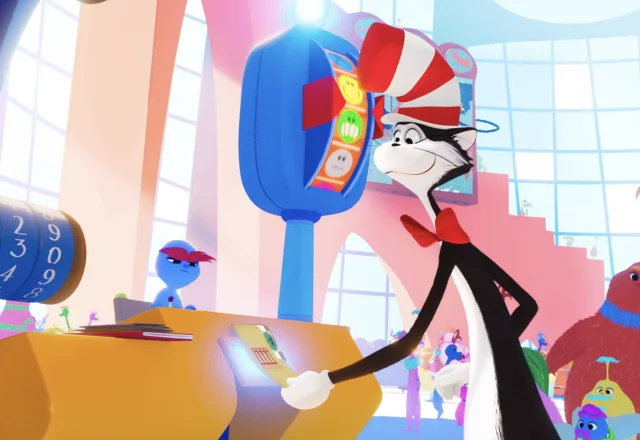

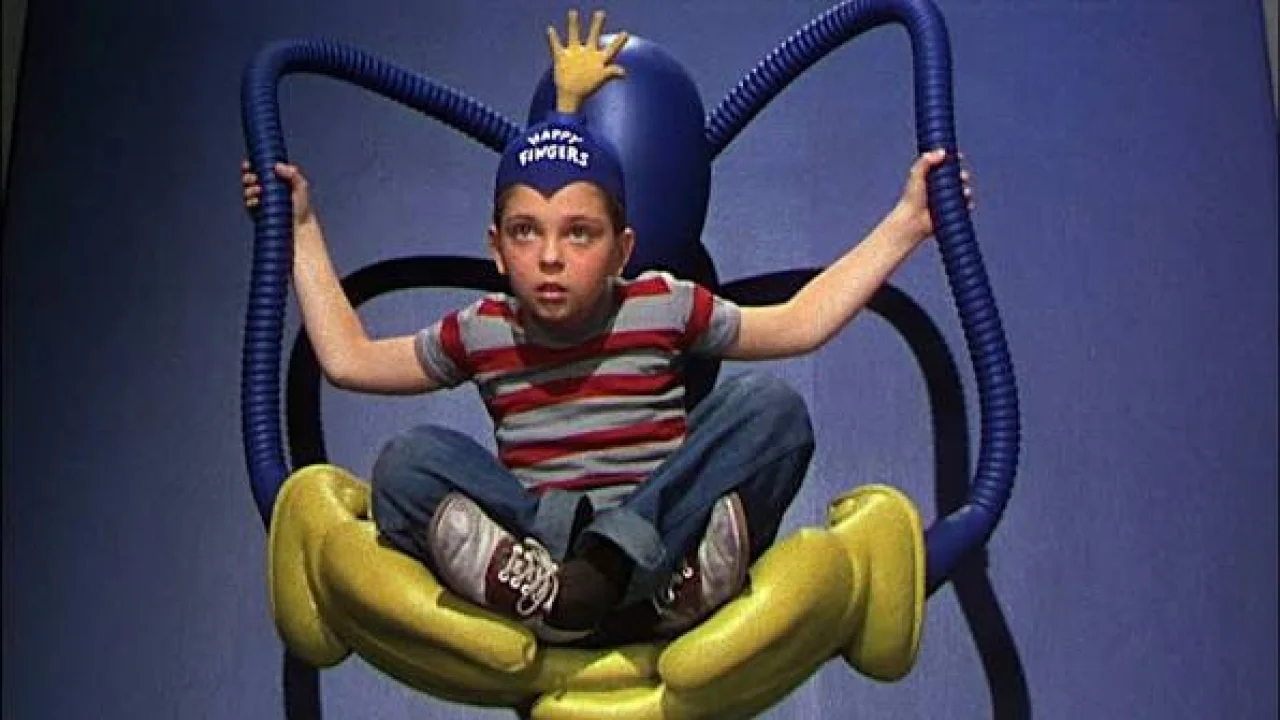
I just walked out of The Cat in the Hat, and I was underwhelmed. It’s not a terrible movie. It just felt so beige and inconsequential. It’s devoid of the imagination that made the works of Dr. Seuss so memorable. Maybe you’re planning on going to see the animated reboot this weekend with your kids or drunk sorority sisters. I say, save your money and watch a different Dr. Seuss movie instead.
The 5,000 Fingers of Dr. T., released in 1953, holds a pretty unusual distinction in Dr. Seuss history. It’s the only live-action, non-documentary feature film written by Theodor Seuss Geisel himself. Seuss handled the story, screenplay, and song lyrics, making this bizarre musical fantasy a one-of-a-kind entry in his filmography.
What the heck is The 5,000 Fingers of Dr. T.? Oh, it’s just one of the greatest family films of all time that you probably haven’t seen.
A Nightmare in Technicolor
The 5,000 Fingers of Dr. T. is a surreal musical fantasy told through the eyes of 10-year-old Bart Collins, a boy whose hatred of piano lessons sends him spiraling into one enormous, bizarre nightmare. With towering expressionistic sets, geometric landscapes that look like something Salvador Dalí might have dreamed up, and a healthy dose of dream logic, the film turns childhood frustrations into a strange adventure about being forced into routines you desperately want to escape.
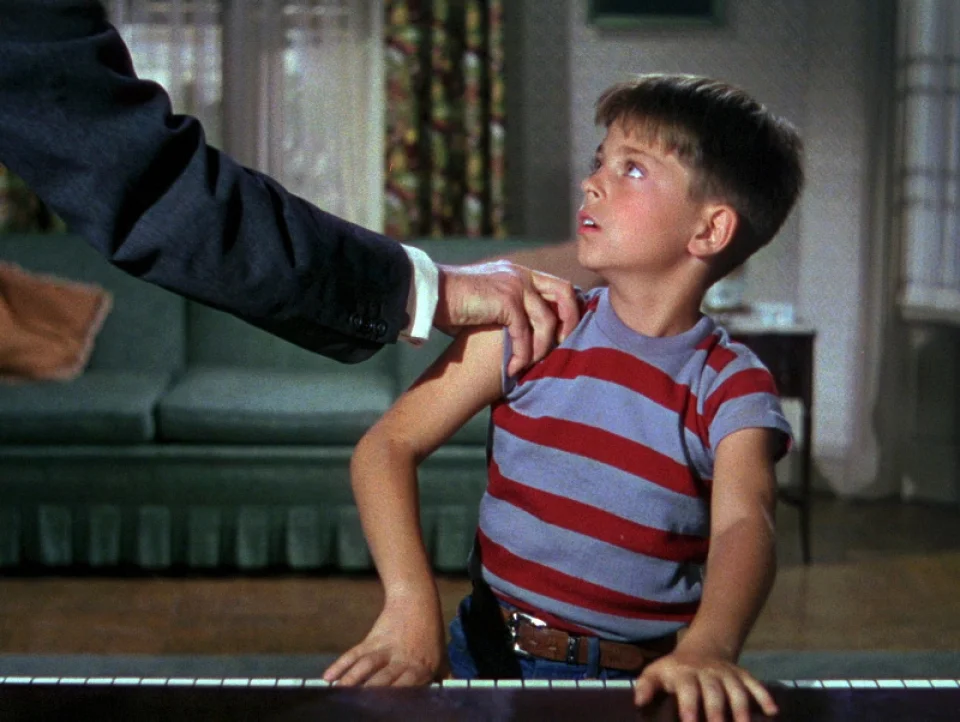
My brain nearly melted when I first saw The 5,000 Fingers of Dr. T. at the Hollywood Theatre in Portland, Oregon. I wasn’t expecting to be so fully swept into its alchemy. People were singing. Everyone was applauding. When it was over, I sought it out on VHS, and I’ve been watching it ever since. I even tracked down the soundtrack on vinyl, which is one of my favorite possessions.
The Reality and the Dream
In the movie, Bart Collins has had enough of piano lessons. His widowed mother, Heloise, constantly pushes him to practice, while his strict and overbearing piano teacher, Dr. Terwilliker, makes sure there is no escaping those endless scales. For Bart, playing the piano has become less of a hobby and more of a prison sentence.
The one adult who seems to understand him is William Abl, a musical-instrument technician and plumber working on the sinks inside the Collins home. Abl offers Bart some much-needed encouragement, explaining that everyone has their own inner rhythm and shouldn’t be forced into doing things simply because someone else demands it.
Unfortunately, Bart’s problems aren’t going away. Overwhelmed by the endless practicing and monotony, he eventually falls asleep at the piano. That’s when his ordinary childhood frustration turns into a massive, vivid nightmare.
Bart wakes up inside the Happy Finger Institute, a bizarre castle filled with towering ladders and enormous geometric shapes. It’s a strange, imposing place that looks as though it was designed by someone who had never heard the phrase “less is more.”
His piano teacher has also undergone quite a transformation. Dr. Terwilliker is now known as Dr. T, a flamboyant and tyrannical dictator who wears a magical Happy Hat. He’s built a colossal, double-decked piano that requires exactly 500 boys to play continuously. That’s 5,000 fingers, which explains the movie’s wonderfully ridiculous title.
Bart is supposed to become one of those 500 boys, whether he likes it or not.
Things get even worse when Bart discovers that his mother has become Dr. T’s hypnotized assistant and financial prisoner. The dictator plans to marry Heloise, steal her money, and keep her under his control forever. Bart has gone from hating piano practice to trying to rescue his mother from a musical tyrant with an enormous keyboard.
Bart escapes into the depths of the castle in search of someone who can help him. Fortunately, he discovers that Mr. Abl has followed him into the dream world. Abl is working as a plumber at the institute, installing the massive sinks needed for Dr. T’s operation. Bart tries to convince him that Dr. T is evil and that Heloise is being held against her will, although Abl isn’t immediately convinced.
The two eventually manage to break Heloise out of her hypnotic trance, at least temporarily. Dr. T recognizes the threat to his plans and sends his guards to capture Bart and Abl.
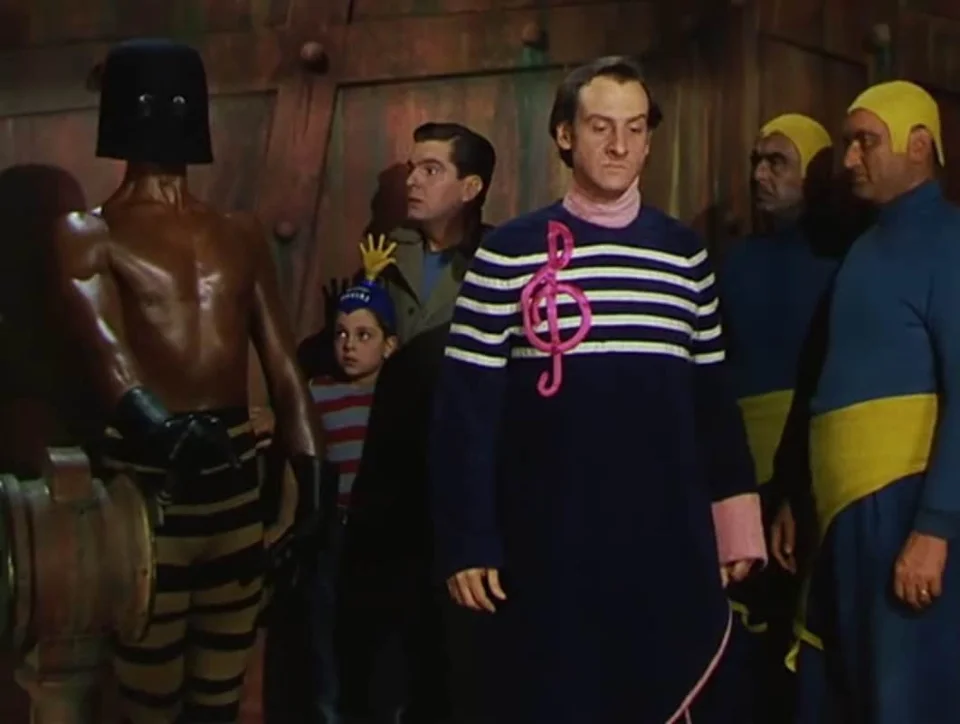
Their punishment is a trip to the castle dungeon, an underground prison filled with musicians who have committed the unforgivable offense of playing something other than the piano. Violoncellists, drummers, horn players, and other non-piano musicians have been imprisoned and tortured under Dr. T’s rule. The prisoners even perform a surreal, macabre dance that turns their exile into one of the film’s strangest musical sequences.
Being thrown into the dungeon doesn’t stop Bart and Abl from coming up with a plan. Using plumbing supplies, the two construct a makeshift magical substance capable of absorbing and destroying sound. It may not look like much of a weapon, but when your enemy’s entire empire revolves around a giant piano, silencing the music could be the perfect way to bring everything crashing down.
The day of Dr. T’s grand opening finally arrives. Five hundred boys, all wearing matching shirts and beanies, are chained to the enormous double-decked piano. Dr. T takes his place at the podium, ready to conduct his musical masterpiece.
Bart and Abl manage to escape the dungeon just in time. Bart sneaks into the piano structure and deploys their sound-absorbing weapon, which becomes known as the Sound Sucker. As Dr. T strikes the opening chords, the sound is pulled into a swirling vortex. The massive piano begins malfunctioning, and the dictator’s carefully planned musical spectacle erupts into chaos.
Amid the smoke, sirens, and scattering boys as the Happy Finger Institute collapses, Bart suddenly wakes up at his piano back home. The entire adventure was a dream. Free from Dr. T’s nightmare world, Bart runs outside to play with his friends and happily greets Mr. Abl, who is still finishing the plumbing work in the real world.
Come on and Dress Me in My Finest Array
The songs in The 5,000 Fingers of Dr. T. are as strange and unpredictable as the world Dr. Seuss created for them. Seuss wrote the lyrics, with music composed by Frederick Hollander, and the results range from playful children’s tunes to elaborate operetta.
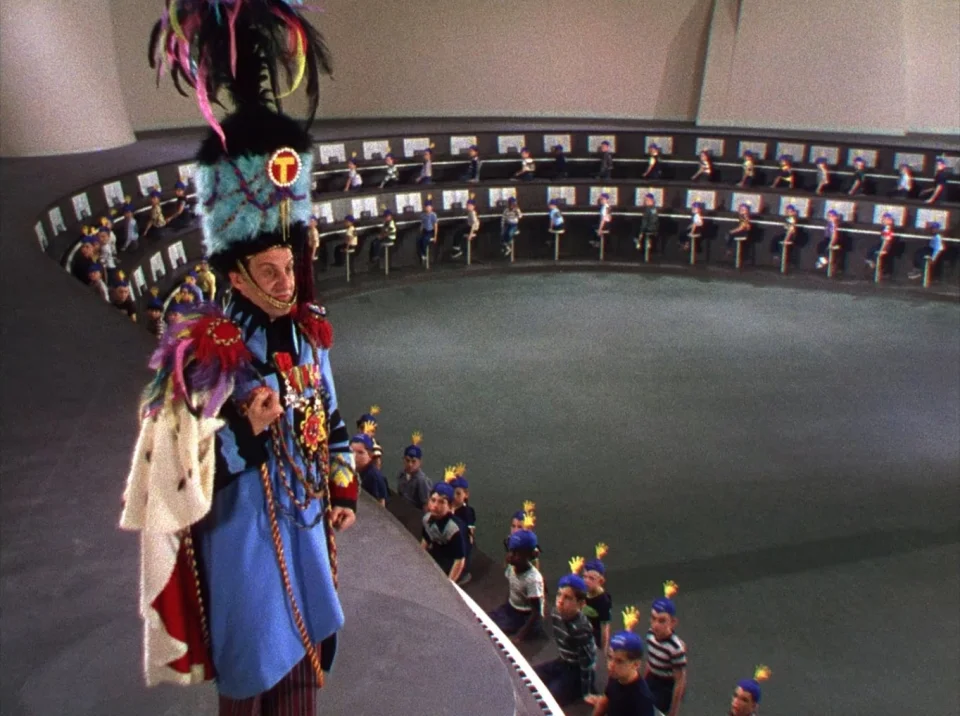
Dr. T gets one of the film’s biggest musical showcases in “The Dressing Song,” also known as “Do-Mi-Do Duds,” as his servants fuss over his wardrobe and prepare him for another grand entrance. Hans Conried throws himself into the performance, rattling off absurd clothing requirements while dressing in his signature Happy Hat and other pieces of dictatorial finery. The song is gloriously theatrical, giving Dr. T the kind of over-the-top vanity you’d expect from a man who believes he deserves a giant piano and 500 children to play it for him.
Not every number is played for laughs. “Ten Happy Fingers” introduces the Happy Finger Institute’s bizarre musical dictatorship, with the Twin Rollerskating Guards leading a hypnotic march about the supposed greatness of Dr. T’s piano regime. Their shared beard makes the pair even more unsettling, while the song’s militaristic rhythm gives the institute the feel of a children’s nightmare disguised as a marching band.
That darkness reaches another level in “The Dungeon Shocker,” a wordless ballet performed by musicians imprisoned for playing anything other than the piano. Surrounded by enormous, surreal instruments, including a giant xylophone and a massive harp, the performers turn the dungeon into an expressionistic dance of musical persecution. It’s one of the film’s most visually arresting sequences, and a long way from the cheerful singalongs audiences might expect from a children’s musical.
Bart gets a more heartfelt moment with “Because We’re Kids,” a melancholy protest song in which Tommy Rettig gives voice to the frustrations of children who are dismissed, ordered around, and expected to follow rules simply because adults say so. Its message fits neatly with the anti-authoritarian streak running through Seuss’s work.
The film also makes room for a more conventional Hollywood-style romance in “Get Together Weather,” a duet between Peter Lind Hayes as Mr. Abl and Mary Healy as Heloise Collins. Temporarily freed from Dr. T’s hypnotic influence, the two find themselves singing about how naturally their personalities fit together. It’s a sweet change of pace in a movie where a giant piano, a tyrannical music teacher, and a dungeon full of imprisoned musicians are all perfectly normal parts of the afternoon.
A 5,000-Fingered Box Office Bomb
The theatrical release of The 5,000 Fingers of Dr. T. in 1953 was a spectacular disappointment, and Dr. Seuss was left so unhappy with the experience that he reportedly called the entire production a “debaculous fiasco.”
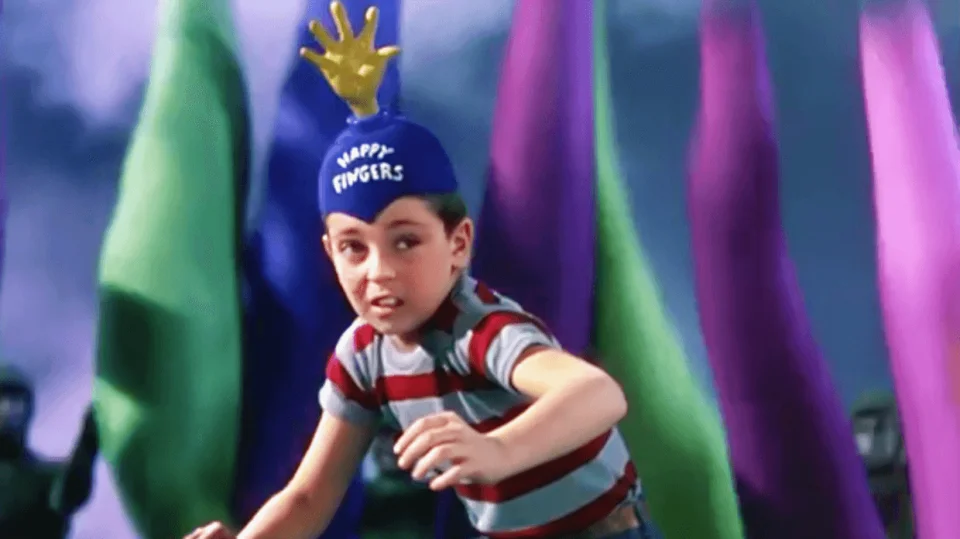
Columbia Pictures had hoped to create a Technicolor musical fantasy that could stand alongside The Wizard of Oz. Instead, the studio wound up with an expensive box-office failure that its creator wanted little to do with afterward.
The production cost ballooned to approximately $2.75 million, thanks in part to enormous sets that occupied nearly every soundstage on the Columbia lot. The movie brought in only around $1 million, leaving the studio with a substantial loss. Things weren’t looking much better before the film even reached theaters. During test screenings in 1952, audiences reportedly walked out in droves, with parents and children struggling to connect with its bizarre dream logic, totalitarian themes, and unsettling atmosphere.
Columbia made another attempt to find an audience in 1958, heavily re-editing the picture and releasing it under the title Crazy Music. That version failed, too.
For Seuss, the financial disaster was only part of the problem. Theodor Seuss Geisel had moved from La Jolla to Los Angeles to oversee the production, pouring himself into an enormous screenplay and sketchbooks filled with designs for the characters and the strange world they inhabited.
He expected to have a meaningful say in how his creation reached the screen. Instead, the Hollywood studio system took control after those disastrous test screenings and began cutting away at the picture. Of the estimated 18 to 20 musical numbers Seuss had developed, roughly half were removed. That left the movie with a much different rhythm and structure than the one he had envisioned, stripping away a substantial amount of the rhythmic wordplay and musical material that made the project so distinctly his.
The studio also changed the way the audience was supposed to understand the world of Dr. T. Seuss’s books don’t usually stop to explain that their strange landscapes are imaginary. The characters simply live in them, and the absurdity is part of the fun.
Columbia, however, wanted a more familiar The Wizard of Oz-style framework, pushing the story toward the idea that the Happy Finger Institute was a dream created after Bart fell asleep at the piano. That decision reportedly frustrated Geisel, who felt the explanation weakened the reality and artistic weight of the world he had created.
The production itself wasn’t exactly a dream, either. One particularly miserable incident involved a young extra among the approximately 150 children on set vomiting directly onto the enormous piano. The sight reportedly triggered a chain reaction, with other children getting sick as well. Geisel later joked that the film’s reviews reminded him of that incident. It’s difficult to imagine a more appropriate behind-the-scenes story for a movie about a tyrannical piano teacher and 500 children trapped in his musical nightmare.
The experience left Geisel so disillusioned with Hollywood that he swore off live-action filmmaking. He returned to children’s books, where he could maintain control over his characters and the worlds they inhabited, and reportedly refused to approve live-action adaptations of his work during the rest of his lifetime.
His later screen projects were carefully controlled animated productions, including the beloved television special How the Grinch Stole Christmas! He also left The 5,000 Fingers of Dr. T. out of his official memoir and did not treat it as one of the works he wanted to celebrate. It’s a rather unfortunate ending for a film that began as such an ambitious personal project.
This Cat Don’t Need No Hat
If you’re planning to go to the theater this weekend for the new animated The Cat in the Hat, I’d suggest watching The 5,000 Fingers of Dr. T. instead.
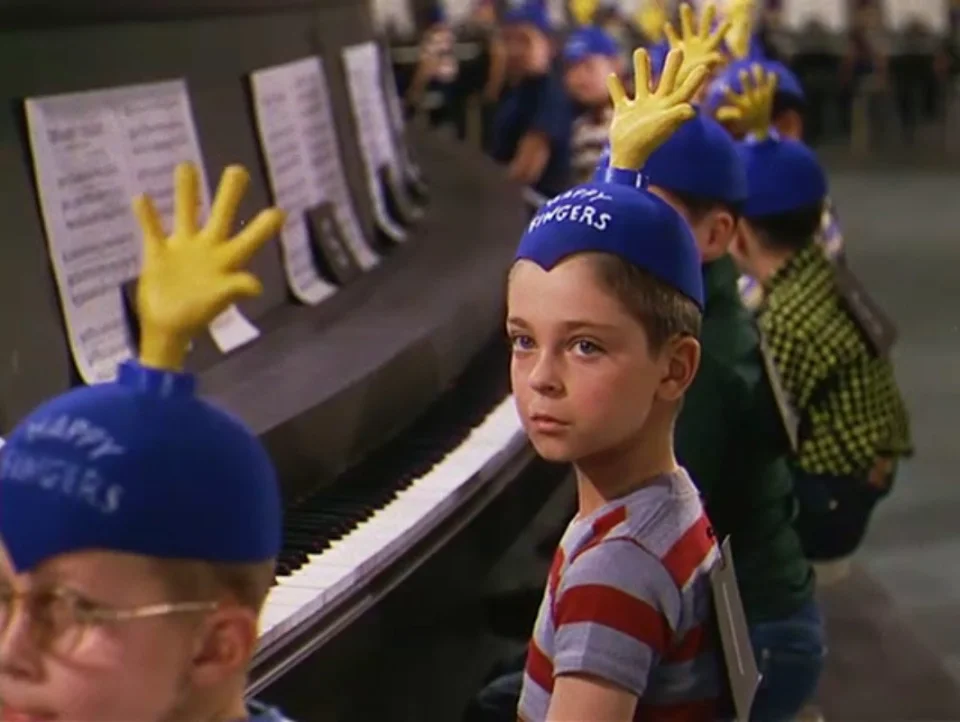
The 2026 The Cat in the Hat may have a familiar name and a big studio behind it, but the 1953 musical is a chance to see Dr. Seuss let his imagination run completely wild in a way that Hollywood rarely allowed him to do again.
We’re talking about a tyrannical piano teacher, 500 captive children, roller-skating guards with a shared beard, a dungeon full of musicians, enormous surreal sets, and songs that can swing from goofy show tunes to genuinely unsettling musical nightmares.
It’s a strange, colorful, occasionally bonkers piece of filmmaking, and that is precisely why it’s worth your time. If you want to see something that feels like it could only have come from the mind of Dr. Seuss, this is the one to put on.
You can currently find The 5,000 Fingers of Dr. T. streaming free with ads on The Roku Channel, so you don’t need to spend another trip to the theater or pay for another subscription to give it a look. It’s also available to rent through Apple TV, Prime Video, YouTube, and Google TV, with rentals listed from $3.99.
So before you spend the weekend with a talking cat and another trip through Seussville, consider visiting the Happy Finger Institute instead. Just remember to keep an eye on your piano teacher. You never know when he might decide he needs 5,000 fingers of his own.