

I just walked out of How to Rob a Bank, and I have a question: Wouldn’t YouTube shut down the “Who’s Hungry?” channel if it were real? I’m talking about the one where a gang of actual bank robbers films its heists, uploads the footage, offers viewers pointers on how to pull off the crimes, and somehow racks up hundreds of millions of views.
David Leitch’s new heist thriller asks us to accept that this operation can keep going while the FBI struggles to catch up. I’m not sure YouTube would be quite so accommodating.
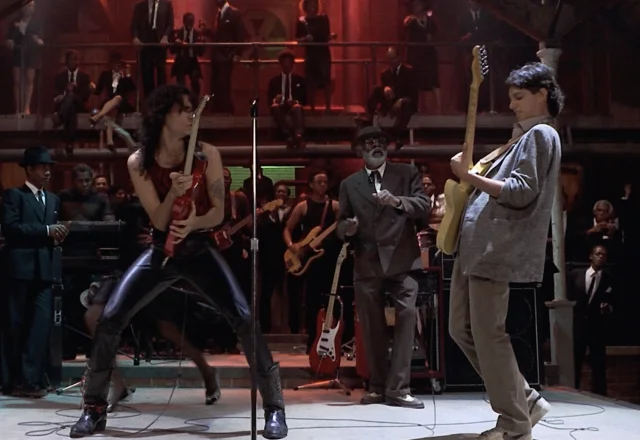
In the movie, Nicholas Hoult plays a popular influencer Ryan, the leader of a crew that turns bank robberies into social engagement. The group doesn’t simply disappear after each job. It records the action, edits the footage into slick videos and builds a following by presenting its crimes as a rebellion against a system that has left ordinary people behind. The Youtube channel “Who’s Hungry?” becomes part of the crew’s identity, and its popularity grows to an almost ridiculous 900 million views across 15 heists.
Not to mention the channel has a big budget box office style unlike anything on Youtube at the moment. Not even MrBeast’s videos look like a movie shot by David Leitch.
I won’t deny that it’s a fun premise for a movie. The robbers become folk heroes. Their videos spread like wildfire. FBI Agent John West, played by John C. Reilly, finds himself chasing criminals who seem more interested in building an audience than keeping a low profile.
But the more I thought about it, the more the whole YouTube part of the operation started to fall apart.
YouTube has rules about this sort of thing. They aren’t particularly friendly to people sharing actual criminal tutorials. Its harmful or dangerous content policy prohibits videos that encourage life-threatening or illegal activities that could cause serious physical harm or death. The platform also specifically addresses instructional theft. Footage of violent robberies can be removed when it is posted without educational or explanatory context. Content that encourages viewers to commit violence is prohibited.
There is a difference between showing a fictional bank robbery in a movie and having the people who committed a real robbery upload their own footage while explaining how they did it. YouTube allows artistic and documentary material in appropriate contexts. So a dramatized film isn’t automatically in trouble. A real crew using its channel to promote armed robberies and teach viewers how to repeat them would be a very different situation.
There is one moment in the movie where it’s quickly mentioned that the videos are being removed. But other Youtube channels keep re-uploading the footage. That’s all well and fine. If it was part of a News Channel report, that would stick. But the “Who’s Hungry?” channel is never removed from the platform, it just keeps racking up subscribers all the way until the end of the film, when Ryan has changed his show to “How to Escape From Prison“.
hat begs the question: Would the channel disappear after its first upload?
Not necessarily.
YouTube’s enforcement system generally starts with a warning for a first Community Guidelines violation. Repeated violations can lead to strikes, and three strikes within 90 days can get a channel terminated. A single severe violation can also result in a shutdown without the usual warning process. Either way, keeping a criminal operation online through 15 filmed robberies would be a pretty extraordinary run.
Then there’s the FBI. The movie’s John West has to bring in a hacker named Reagan played by Zoë Kravitz to help track down the crew. That’s a useful way to keep the cat-and-mouse story moving, but investigators wouldn’t necessarily need a hacker to begin looking into a public channel openly documenting a string of bank robberies.
Online accounts and uploaded videos can provide investigative leads. Law enforcement can seek records from service providers through the appropriate legal process. Federal law also allows authorities to request that companies preserve existing records while they pursue further legal process.
That doesn’t mean investigators can magically identify someone from an IP address in five minutes. VPNs, burner accounts and other precautions can complicate an investigation. But a crew repeatedly publishing evidence of its own crimes is handing investigators a substantial collection of material to examine. The channel could become evidence against the people running it, even if it also gives the FBI a headache.
There is a scene where John West and Reagan dissect the videos for clues. Which eventually leads to some dumpster flowers, and a train car. But that’s a scene by scene analysis of the video itself.
That all said?
How to Rob a Bank isn’t trying to be a documentary about YouTube moderation or federal investigative procedures. They also never delve into the monetization of the channel, which would be making the bank robbers some nice scratch outside of the money culled from the bank vaults.
Director David Leitch and screenwriter Mark Bianculli are playing with the idea of criminals turning themselves into internet celebrities. The crew’s videos are part of the movie’s larger Robin Hood-style fantasy, with the robbers pitching their crimes as a strike against corporate greed. Their audience becomes part of the story, and the channel gives the gang a platform to turn its message into a movement.
That works as movie logic. In the real world, though, the crew would have a much harder time keeping its online operation alive. YouTube would have grounds to remove videos that cross its policies, and investigators would have plenty of reason to start examining the people behind the uploads.
While I had an okay time watching Ryan and his crew turn bank robberies into viral content, I left the theater thinking the most unbelievable part might be how long their YouTube channel stayed online. And how none of their videos looked like actual real content you’d see from an influencer. Maybe the FBI should have started by checking the Community Guidelines.