Before Steven Spielberg sent audiences running from the beach in Jaws, he gave them a reason to fear the highway. On November 13, 1971, a made-for-television thriller called Duel premiered on ABC’s Movie of the Week, introducing viewers to a traveling salesman being hunted by a seemingly unstoppable tanker truck.
Fifty-five years later, Spielberg’s first feature-length film is getting another moment in the spotlight, including a new 4K restoration screening at New York’s Museum of Modern Art.
If you haven’t seen Duel in years, or somehow missed it altogether, this is a good excuse to track it down. The film is currently available to rent or buy digitally in 4K UHD through Amazon Prime Video, Apple TV and Fandango at Home. At the time of writing, Amazon lists the UHD rental for $3.99 and the purchase for $14.99. Availability and prices can change, so check your preferred storefront before renting.
There’s also a special big-screen opportunity coming up. MoMA will screen a brand-new 4K restoration of Duel on Sunday, December 6, at 4 p.m., as part of its Sundays with Steven series celebrating the filmmaker.
The screening is listed as a 90-minute 4K restoration DCP. Same-day film admission is included with a general museum ticket, subject to availability, although visitors still need to collect a screening ticket.
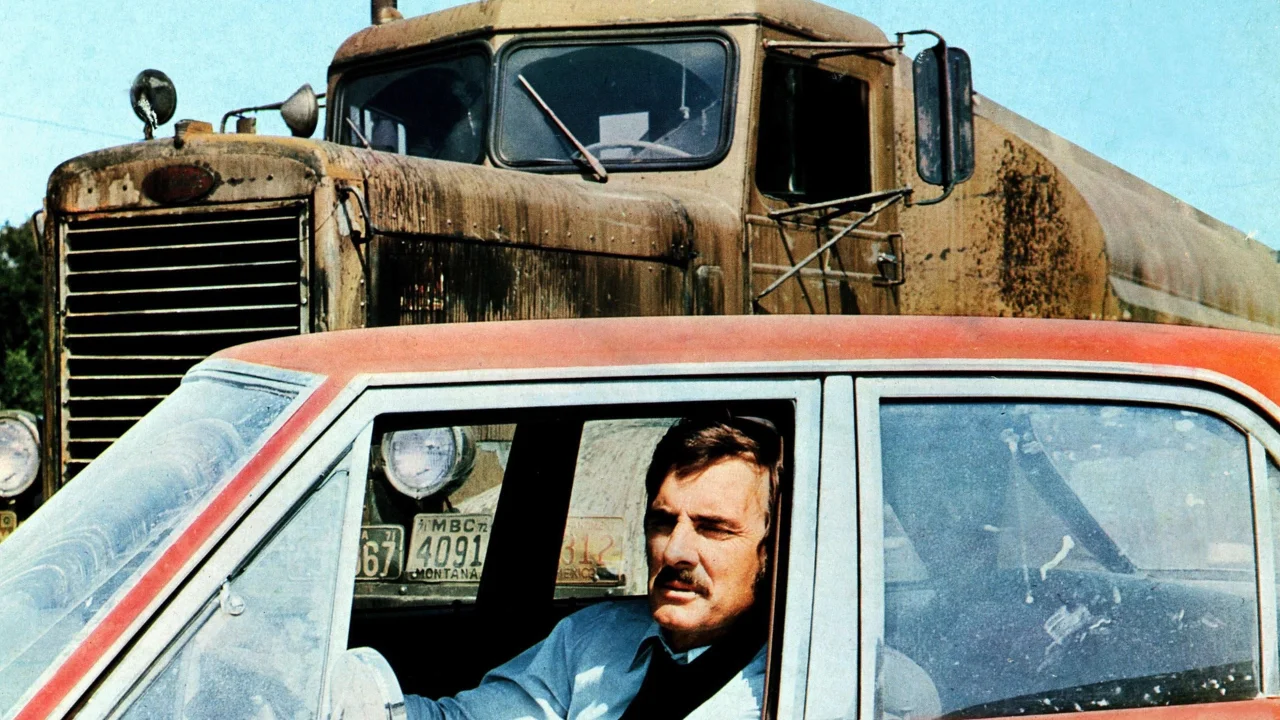
For anyone who only knows Spielberg through his later blockbusters, Duel is a fascinating look at the filmmaker before he became one of Hollywood’s biggest names. Dennis Weaver stars as David Mann, a traveling salesman whose ordinary drive through California turns into a nightmare after he passes a filthy, battered Peterbilt tanker.
The truck’s driver takes offense and begins terrorizing Mann, following him along isolated roads and trying to force his car off the highway. The driver is never properly revealed, leaving the truck itself to become the movie’s monster.
Spielberg was just 24 when he directed the film, working with a reported budget of $425,000. Despite being made for television, Duel was shot on 35mm film and shot on actual California roads and highways. Spielberg wanted the landscape to be part of the experience, using the open roads and canyons to make Mann feel increasingly trapped. The production moved at a punishing pace, with principal photography completed in roughly 13 days.
The result was a suspense thriller that helped establish the filmmaking approach Spielberg would take into Jaws four years later. In both films, the audience spends much of the story reacting to a threat that remains largely unseen. In Duel, the truck driver stays hidden behind the windshield, while the truck’s enormous grille and roaring engine do the frightening. In Jaws, Spielberg used a similar strategy with the shark, building tension through what the audience couldn’t see as much as what it could.
Spielberg even carried one of Duel‘s sound effects into Jaws. When the tanker plunges over the cliff at the end of the earlier film, it makes a distinctive, almost dinosaur-like death rattle. Spielberg later confirmed that he asked the sound effects editor on Jaws to find that exact sound in the library and use it when the shark’s body sinks to the ocean floor. So yes, the truck and the shark share a little piece of movie history.
The story behind Duel is almost as unsettling as the movie itself. Richard Matheson, the legendary writer behind I Am Legend and numerous Twilight Zone stories, based his short story on an experience he had on November 22, 1963, the day President John F. Kennedy was assassinated.
Matheson had been playing golf with fellow writer Jerry Sohl. After hearing the news of Kennedy’s death, the two men drove home through California when a large truck began tailgating them along the highway. The encounter stayed with Matheson, who eventually turned the experience into the short story “Duel,” published in the April 1971 issue of Playboy.
Spielberg’s secretary brought the story to his attention, and the young director immediately wanted to make it. Matheson adapted his own work for the screen, giving Spielberg a lean story that relied heavily on images, movement and suspense rather than lengthy conversations. It was exactly the kind of material a young filmmaker could attack with a camera and a clear sense of how to keep an audience on edge.
There’s another interesting wrinkle for anyone planning a rewatch. The version that originally aired on ABC wasn’t the same cut later released theatrically. The television version ran approximately 74 minutes, but Universal wanted a feature-length version for international theaters. Spielberg returned to shoot roughly 16 additional minutes, expanding the film to around 90 minutes.
Those additions included the opening drive out of Los Angeles, a longer sequence involving Mann’s wife, the encounter with a stalled school bus and the memorable railroad crossing scene, where the truck tries to shove Mann’s car into the path of an oncoming train. That last sequence is one of the film’s most nerve-racking moments, and it wasn’t part of the original broadcast cut. The expanded theatrical version is the version most viewers have encountered on home video.
It’s remarkable that a television movie made for a relatively small budget could become such an important stepping stone in Spielberg’s career. He would go on to make Jaws, Close Encounters of the Third Kind, Raiders of the Lost Ark, E.T. the Extra-Terrestrial and plenty more, but Duel already contains the instincts that would make those movies work.
Fifty-five years after that first ABC broadcast, the truck is still out there, and it hasn’t gotten any friendlier. If you’re looking for a classic Spielberg thriller to revisit, Duel is ready for another trip down the highway.