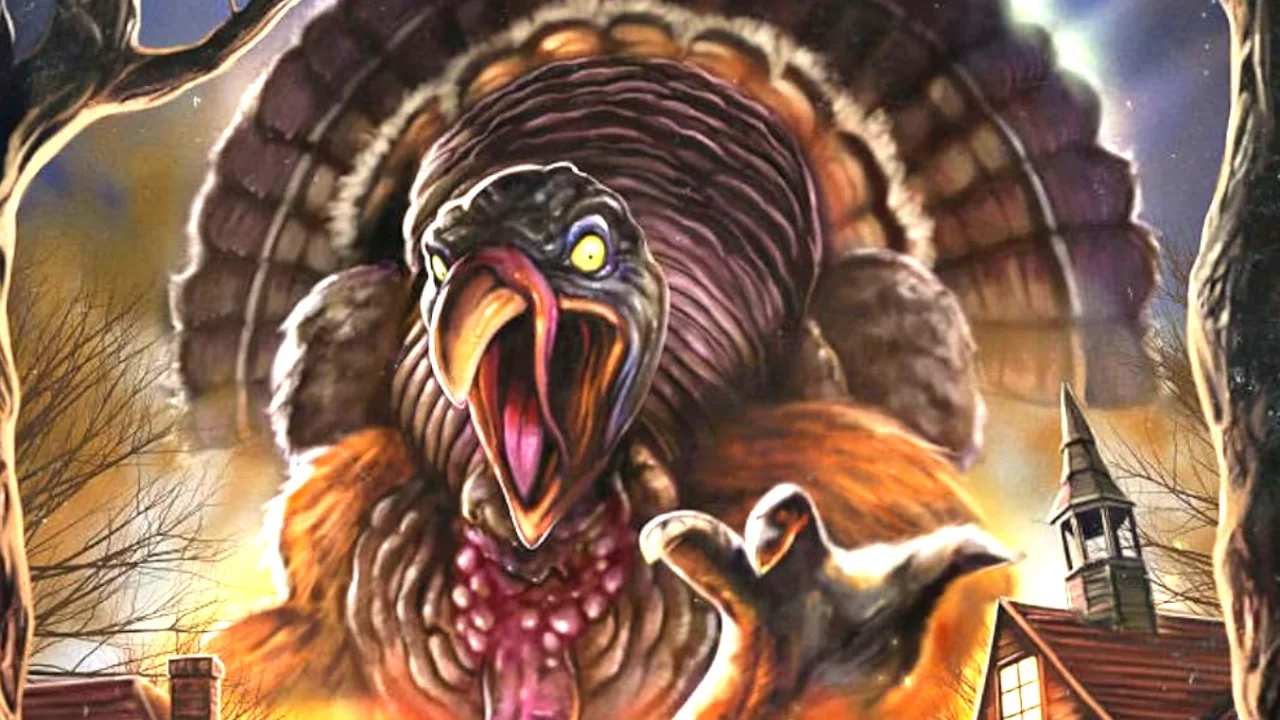
Thanksgiving is supposed to be about family, food, football, and trying not to get into an argument with Aunt Joyce before dessert. But what if something else is lurking out there on Thanksgiving? Something with claws, fangs, feathers, and an appetite that makes a second helping of turkey look downright reasonable?
Believe it or not, there are several lesser-known regional cryptids and folklore legends connected to the Thanksgiving season. They’re strange and creepy. Some of them sound like they crawled straight out of a fever dream after too much pumpkin pie.
Which one deserves the title of Thanksgiving’s scariest monster? Is it the Gobbleknocker, the Gobblesquatch, or the Harvest Hag? We’re going to take a closer look at these bizarre creatures and what makes each one so unsettling.
Consider this a little holiday horror before the leftovers take over the refrigerator. If you thought the turkey was the most dangerous thing on the Thanksgiving table, you might want to keep an eye on the woods.
The Gobbleknocker: A Turkey-Boar Monster That Hunts the Hunters
If you thought the biggest danger in the woods during Thanksgiving season was stumbling upon me in my camper, the Gobbleknocker would like a word. This modern festive legend, rooted in Appalachian-style tall tales and late-autumn folklore, is a rare holiday cryptid that combines November’s hunting-season traditions with the kind of wilderness-monster nightmares usually reserved for campfire stories.
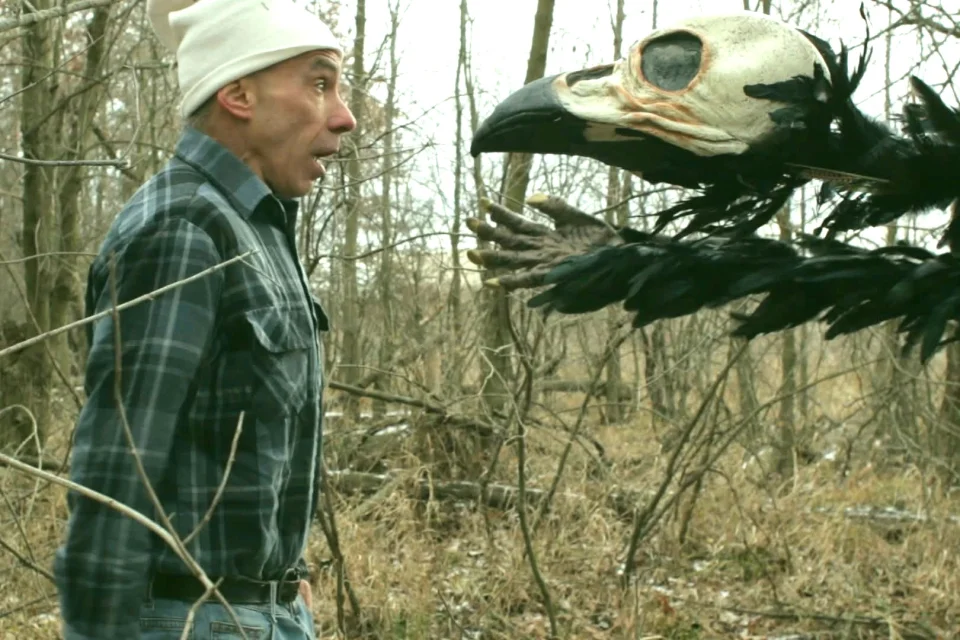
The Gobbleknocker is described as a grotesque hybrid of a massive wild turkey and a feral mountain boar. It has the distinctive warty head and dark feathers of a turkey, but forget the bird’s relatively fragile frame. This beast has the stocky, muscular body of a wild boar, complete with bristly hair and an aggressive disposition.
It doesn’t even make an ordinary turkey call. Instead, it produces a guttural gobble that echoes through dense forest valleys. Imagine following what sounds like the biggest turkey you’ve ever heard, only to discover that the bird making all that noise has been hitting the gym and eating hunters.
According to the legend, the Gobbleknocker emerges exclusively in late November, around the peak of autumn hunting season and the days surrounding Thanksgiving. It is said to be an ambush predator, but with one particularly nasty twist: it hunts the hunters.
The creature uses its uncanny gobbling mimicry to lure people tracking game farther into the wilderness. A hunter hears what sounds like an unusually large wild turkey and follows the calls into thick brush, ravines, and unfamiliar mountain terrain. Once the hunter is isolated, disoriented, and thoroughly lost among the twisting trails, the Gobbleknocker attacks. That’s one way to make sure nobody brings home Thanksgiving dinner.
The creature also carries a couple of symbolic meanings in folkloric interpretations. One casts the Gobbleknocker as a walking punishment for holiday gluttony. The turkey represents the centerpiece of the Thanksgiving feast, while the boar has historically been associated with greed and excess. Put them together and you get a monster that supposedly punishes people who take their appetites too far. The other interpretation connects it to ancient harvest traditions, describing the Gobbleknocker as a lingering nature spirit tied to pre-winter rituals. In that version, it protects the woods by going after hunters who take more than they need from the land before winter arrives.
So whether it’s enforcing portion control or protecting the local wildlife, the Gobbleknocker is apparently not interested in letting anyone enjoy an all-you-can-eat buffet.
The Gobble-Squatch: Bigfoot’s 500-Pound Thanksgiving Cousin
Bigfoot has spent decades frightening campers who really should know better than to wander into the woods alone. What happens when you combine that legendary wilderness beast with a gigantic Thanksgiving turkey? You get the Gobble-Squatch, also known as the Gobblesquatch, a wonderfully ridiculous creature that takes holiday gluttony to a whole new level.
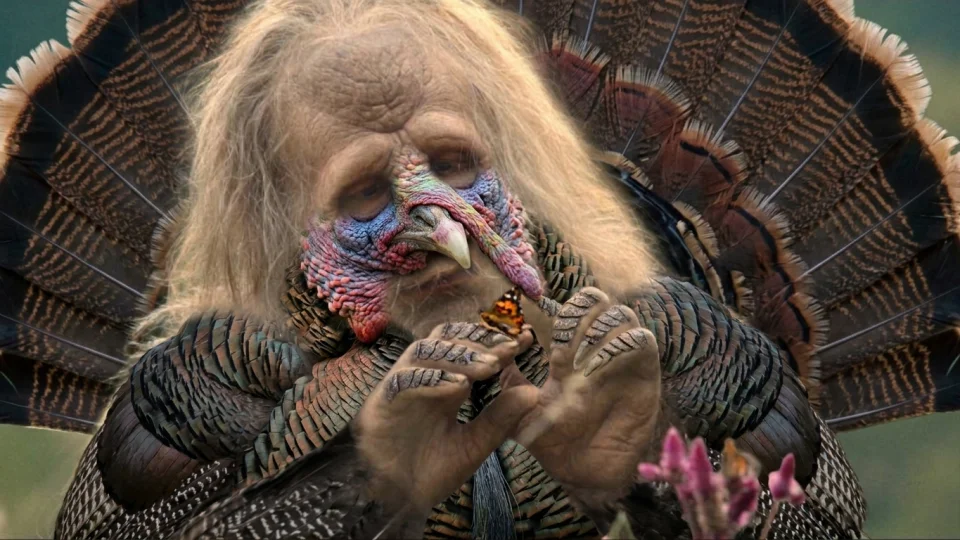
This tongue-in-cheek entry in American holiday folklore has found a home in creepypastas and campfire stories. It’s basically a birdy Bigfoot with a serious portion control problem.
The Gobble-Squatch is described as a massive, two-legged turkey that can stand anywhere from seven feet tall to the height of a small tree. That’s already an uncomfortable amount of bird, but the estimated weight of 500 pounds makes it even worse. Its body is covered in thick, dark, furry plumage, with a gigantic fan-shaped turkey tail, a sharp predatory beak, and powerful taloned feet.
You supposedly know one is nearby when a booming, low-pitched gobble starts shaking the ground from somewhere along the tree line. If you hear that sound, don’t assume you’ve stumbled across the world’s most enthusiastic Thanksgiving turkey.
Unlike cryptids that supposedly stalk people for sport, the Gobble-Squatch has a much more relatable weakness: Thanksgiving dinner.
According to the legend, its sense of smell becomes incredibly powerful on the fourth Thursday of November. The aroma of roasting turkey and all the fixin’s is enough to lure the creature out of its wilderness hideaway and toward human settlements. It reportedly lurks at the edges of backyard woods or, even worse, peers directly through dining room windows, watching families enjoy their holiday meals.
Nothing ruins Thanksgiving quite like looking up from your mashed potatoes and making eye contact with a 500-pound turkey monster.
The Gobble-Squatch even comes with a collection of completely ridiculous faux-historical accounts. One of the oldest supposedly dates back to 1672 Virginia, when a young settler named Ezekiel Fitzgerald was allegedly arrested and hanged for heresy after telling magistrates he’d seen a turkey with a wingspan “greater than the throne of the Almighty.” The authorities were willing to entertain some pretty strange accusations, just not that one.
Another story involves a young Thomas Jefferson, who was supposedly sent home from school for using words that didn’t exist. According to the joke historians behind this tale, “gobbledygook” was actually a local Virginia term for skeptics who refused to believe a 500-pound turkey lived in the Blue Ridge Mountains. That’s certainly a more entertaining explanation than anything you’re likely to find in a history textbook.
The modern sightings get even stranger. A 1967 account claims that a hippie commune in the Pacific Northwest abandoned its counterculture lifestyle after a run-in with the beast. Their leader reportedly claimed a giant turkey had pecked holes in their Volkswagen camper van and swallowed their sleeping bags whole.
The survivors supposedly gave up their old habits and switched exclusively to green tea. Then there’s the mysterious Professor Wimscott, a fictional internet-lore expert who allegedly vanished in the Blue Ridge Mountains in 2010. His final diary entry supposedly described an attempt to infiltrate a 14-foot Gobble-Squatch nest by disguising himself as an egg. We can only assume the research grant didn’t cover that particular field technique.
At the end of the day, the Gobble-Squatch is a modern Thanksgiving monster built for laughs as much as scares. Still, it offers one useful piece of holiday survival advice: Keep those curtains closed while you’re eating. You never know when a gigantic, feather-covered Bigfoot might be standing outside, drooling over your stuffing.
The Harvest Hag: The Ghostly Guardian of Thanksgiving’s Leftovers
If the Gobbleknocker wants to eat you and the Gobble-Squatch wants to eat your Thanksgiving dinner, the Harvest Hag has a different problem with humanity.
She’s here to make sure you appreciate what you’ve got, and she’d prefer you didn’t waste a single bite.
Unlike the other two creatures, the Harvest Hag has roots in much older agricultural folklore, drawing on centuries of European and Celtic harvest traditions and the terrifying crones of old legends. She’s often lumped in with modern American Thanksgiving cryptids, but her backstory reaches much further back than a family gathering around a turkey.
The Harvest Hag’s origins are tied to the final sheaf of crops left standing in the fields at the end of autumn. In traditional Irish, Scottish, and English farming customs, that last patch of wheat, oats, or corn was believed to be the final hiding place of the Harvest Spirit.
Farmers didn’t simply cut it down and call it a day. They would braid the remaining stalks into a woman-shaped figure known as a corn dolly. In parts of Wales and northern Ireland, this straw effigy was specifically called “The Hag,” or The Cailleach, a name associated with an ancient seasonal crone goddess connected to winter and the harvest.
There was even a ritual involved in bringing the harvest to a close. Because cutting down the final refuge of the Harvest Spirit was considered risky, farmworkers would stand back and throw their sickles at the sheaf instead.
Whoever managed to knock it down earned the honor of carrying the Hag into the farmhouse kitchen, marking the end of the year’s labor and supposedly bringing good fortune for the winter. It’s a little different from bringing home a pumpkin pie, but apparently the old farmers knew how to make harvest season interesting.
In modern campfire tales about rural American farmland around Thanksgiving, the Harvest Hag has taken on a much more frightening form.
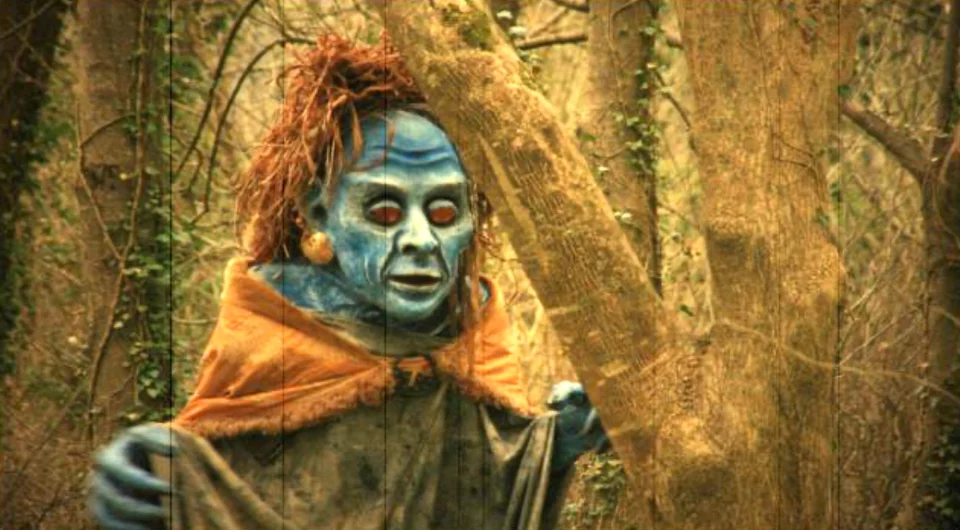
She’s no longer just a straw figure sitting in the farmhouse. She’s described as a shadowy apparition wearing ragged autumn clothes. Her skin resembles dried corn husks, while her long gray hair rustles like dead leaves blowing across an empty field. She reportedly appears at twilight in bare cornfields and farmland after the final November harvest, watching nearby homes from the edges of the fields.
The Harvest Hag isn’t particularly interested in hunting people for food. She’s more concerned with how they treat the food and land they’ve been given. Her targets are supposedly households that waste enormous amounts of food or show little respect for the natural environment.
If a family carelessly throws away a huge portion of its Thanksgiving feast, or a farmer strips the land bare without leaving anything behind for wildlife, the Hag is said to take notice. And she doesn’t exactly send a polite reminder.
According to the legends, she can sneak into barns and spoil stored winter provisions. She can also cause crops to rot before their time. Or torment an entire household with nightmares. Some accounts describe her standing silently in doorways. A particularly unsettling detail that echoes old Night Hag folklore and stories of sleep paralysis.
Her message is simple enough: winter is coming, resources are limited, and wasting what the land provides has consequences.
Of the three Thanksgiving cryptids we’ve encountered, the Harvest Hag might be the one with the most important lesson. You can laugh at a giant turkey monster or a Bigfoot-sized bird stalking your stuffing, but there’s something genuinely creepy about a ghostly figure watching from the edge of a harvested field because somebody threw away half a casserole. Maybe finish those leftovers. You never know who’s keeping score.
Other Thanksgiving Creatures to Keep an Eye On
The Gobbleknocker, Gobble-Squatch, and Harvest Hag aren’t the only strange characters lurking around Thanksgiving folklore. Florida has its own seasonal oddity known as the Moss Man, reportedly spotted around Gold Head Branch State Park in Clay County. According to a local tradition, this figure covered head to toe in Spanish moss emerges from the woods on Thanksgiving night and makes its way into the lake. Nobody seems to know exactly what happens after that, but watching a moss-covered stranger wander out of the forest and disappear into a lake sounds like a pretty good reason to head back inside.
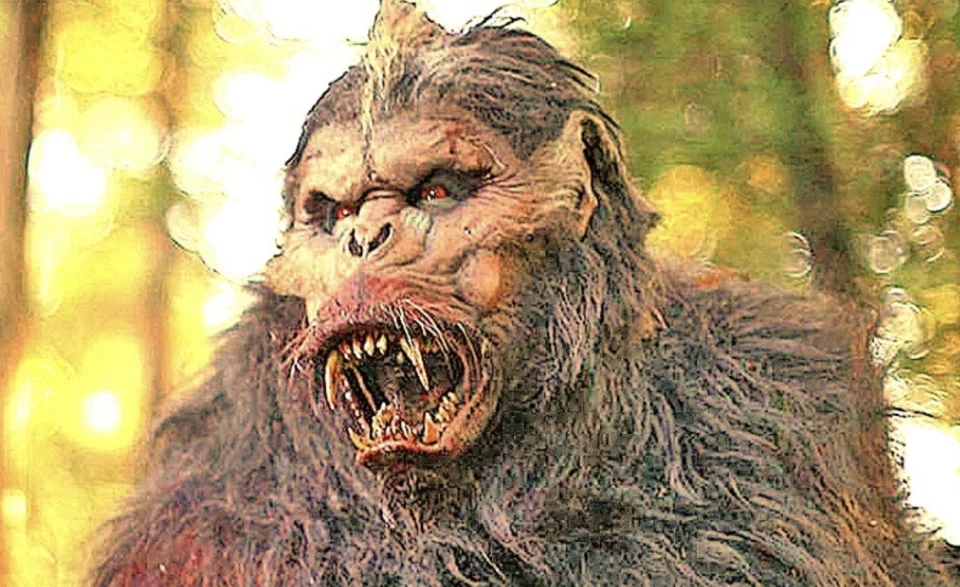
Then there are the Pukwudgies, two-to-three-foot-tall trickster beings from Indigenous Wampanoag and Lenape folklore, associated with the Northeast and Great Lakes regions. They aren’t Thanksgiving monsters in the traditional sense. Their stories shouldn’t be mistaken for holiday inventions. However, the Wampanoag connection places their folklore in southeastern Massachusetts, the ancestral homeland tied to the history of the first Thanksgiving. These little troublemakers are a reminder that the region’s stories and traditions stretch back long before the holiday became an annual excuse to eat too much turkey.
Have These Thanksgiving Cryptids Made It to Hollywood?
You might think creatures like the Gobbleknocker, Gobble-Squatch, and Harvest Hag would have Hollywood producers fighting over the rights to bring them to the big screen. Surprisingly, none of these exact cryptids has become the star of a major-studio movie or network television series.
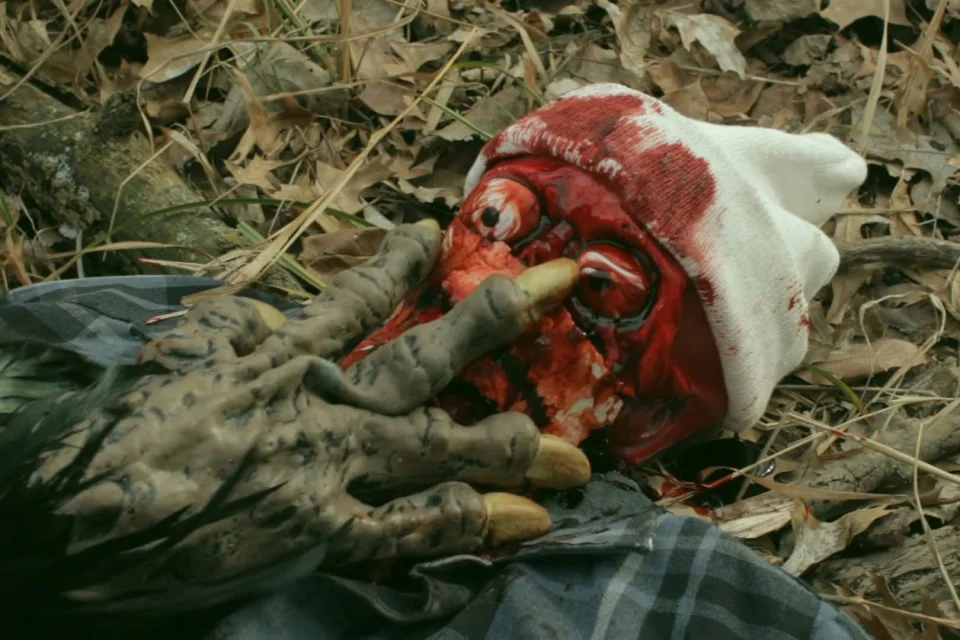
They’re still mostly hanging around the fringes of regional folklore, internet creepypastas, and comedic paranormal storytelling. That doesn’t mean filmmakers haven’t played around with some very similar ideas, though. A few independent horror projects have wandered into the same strange territory.
Take Gobblefoot (2024), an indie creature feature set one week before Thanksgiving. Rather than using the Gobble-Squatch name, the movie introduces a half-bird, half-Bigfoot monster that terrorizes a town. Sound familiar? It’s about as close as you’re likely to get to seeing a Thanksgiving turkey turn into a wilderness nightmare.
The Harvest Hag has a more direct connection to traditional folk horror, too. Although she hasn’t received a standalone slasher movie, her inspiration, The Cailleach and the old harvest-spirit traditions, fits right into the genre’s fascination with sinister seasonal rituals. Films such as Dark Harvest (2023) explore similarly unsettling autumn folklore, even if they aren’t direct adaptations of the Harvest Hag legend.
While none of our Thanksgiving cryptids has quite made the leap into mainstream movie stardom, the ingredients are out there. Hollywood has found room for killer toys, murderous snowmen, and just about every other holiday-themed nightmare imaginable. Surely there’s room for a 500-pound turkey monster, too.
Whether you’re more afraid of the Gobbleknocker hunting you through the woods, the Gobble-Squatch staring through your dining room window, or the Harvest Hag judging your questionable approach to leftovers, Thanksgiving has no shortage of monsters to ruin the holiday. The Harvest Hag might have the strongest claim to a genuinely creepy origin, but the Gobble-Squatch gets points for being a 500-pound turkey with a Bigfoot imprint.
As for the Gobbleknocker, any creature that can turn a hunter into an inside-out puppet deserves a little respect. Enjoy your turkey. Pass the stuffing. Maybe think twice before wandering into the woods after dinner. You never know what’s gobbling out there.