
Before all of our ‘80s action stars became the subject of endless YouTube retrospectives and streaming documentaries, there was a magazine called Heroes that wanted to put them right alongside rock stars and professional athletes.
If Sylvester Stallone, Arnold Schwarzenegger, Chuck Norris and Clint Eastwood were your idea of celebrity royalty, this short-lived 1980s publication was ready to give them the glossy magazine treatment they deserved.
Launched in October 1985 by Heroes Publishing, Inc., Heroes was a bimonthly entertainment rag built around the era’s biggest action stars. Its sometimes color, sometimes B&W pages also welcomed musicians and athletes, making it something of a celebrity scrapbook for fans who couldn’t get enough of the decade’s larger-than-life personalities.
The comparison to Fangoria is an easy way to explain the appeal. Both magazines occupied the same general world of specialty entertainment publications, and both gave fans a place to see their favorite screen icons outside the movies themselves. However, Fangoria had a clearly defined identity built around horror cinema and practical effects. Heroes was playing a much wider game.
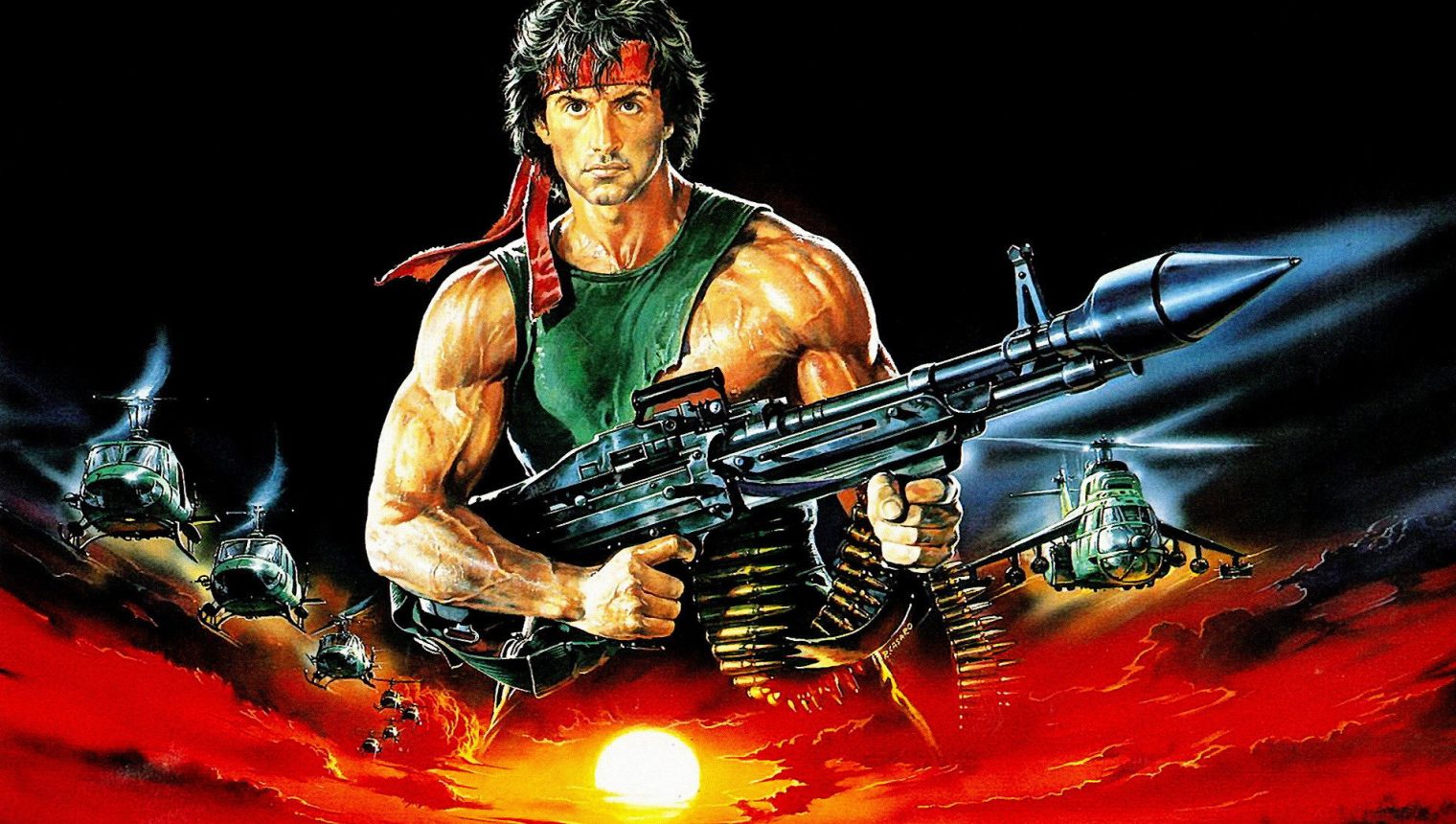
At a time when Rambo, Commando and Rocky IV were helping define the action-movie landscape, Heroes wanted to cover the people who made those movies exciting. It just wasn’t limiting its idea of a hero to someone carrying a machine gun. The very first image in Issue 1 is Kojak star Telly Savalas dressed as the cheshire cat from CBS’s three hour Alice in Wonderland special. An odd choice. Issue 2 has a feature article on Bruce Springsteen, and Kenny Rogers, who starred in the race car action comedy Six Pack, shows up in Issue 3.
Stallone, Schwarzenegger and a Whole Lot of 1980s Star Power
The October 1985 debut issue made its intentions clear with Sylvester Stallone on the cover as John Rambo. Wearing his familiar black tactical gear and stringing a compound bow, Stallone appeared beneath the banner “Exclusive: Stallone Speaks Out.” It was an appropriately muscular introduction for a magazine arriving during the height of the action-star boom.
The first issue also featured Clint Eastwood, Mel Gibson, Chuck Norris, Tina Turner, Grace Jones, Fred Ward, Bruce Lee and Mr. T. That lineup says plenty about the magazine’s approach. Gibson was coming off Mad Max Beyond Thunderdome, Jones had appeared in A View to a Kill, and Ward was starring in Remo Williams: The Adventure Begins. The magazine wasn’t interested in keeping its definition of a hero confined to one kind of entertainment.
Issue #2 arrived in December 1985 with Arnold Schwarzenegger on the cover. The Commando star received an exclusive interview, giving the magazine another major action celebrity to put in front of readers. The issue continued the mix of movie coverage and celebrity photography, with musicians and athletes also part of the editorial lineup.
The February 1986 third issue shifted its attention toward The Jewel of the Nile, featuring Michael Douglas, Kathleen Turner and Danny DeVito. Sylvester Stallone returned to the cover lineup as Rocky, up in a tiny box in the left hand corner. The magazine was still casting a fairly wide net, even as the action-adventure side of its identity remained prominent.
The Jewel of the Nile wouldn’t exactly slide onto the same shelf as Rambo. The third issue also spotlighted dance drama White Knights along with Amblin’s YA adventure Young Sherlock Holmes. The mag was losing the plot a little bit. But there was also a featured article on Iron Eagle, so it was hanging in there.
At a reported cover price of $1.75, Heroes was sold through newsstands and specialty outlets, including comic shops. It was the sort of magazine someone might pick up because of the cover star and then spend the next half hour flipping through glossy photos and interviews. It wasn’t trying to be a serious film journal. The attraction was getting a closer look at the celebrities dominating movie screens and television.
Four Issues and Then It Was Gone
The February 1986 issue wasn’t the end. Heroes Publishing released a fourth edition in April, labeled a special issue and featuring Sybil Danning on the cover, along with NFL’s Howie Long hanging out in the upper left corner. Also showing up for this final issue was Chuck Norris, David Carradine and C. Thomas Howell.
That gives the magazine a documented run of four issues, beginning with the October 1985 premiere and ending with the April 1986 special.
There doesn’t appear to be a public explanation from Heroes Publishing for why the magazine stopped appearing. It’s tempting to point to the broad editorial concept as a possible problem. A reader looking for Rambo coverage might not have been especially interested in Bruce Springsteen or Joe Montana, while music and sports fans already had plenty of publications aimed directly at them. But without circulation figures or a statement from the publisher, the exact reason Heroes disappeared remains unclear.
It also wasn’t really a direct competitor to Fangoria. That magazine had established itself as a destination for horror fans after launching in 1979, eventually building a recognizable identity around the genre’s monsters, makeup effects, slashers, villains and filmmakers. Heroes shared some of the same newsstand territory, but it wasn’t trying to steal the horror audience. It was looking for readers who wanted their action stars treated like pop-culture royalty.
The surviving issues now turn up through back-issue dealers and vintage magazine sellers. Listings on the secondary market show copies being offered at prices that can reach several dozen dollars, depending on the issue and condition. That’s a considerably longer afterlife than the magazine itself enjoyed on newsstands.
The Action-Movie Idea Returned With a Different Name
A few months after Heroes‘ April special, another magazine arrived with a name that sounds like it could have been a more focused version of the original. U.S.A. Combat Heroes debuted in September 1986 with a cover featuring Chuck Norris from Invasion U.S.A., Arnold Schwarzenegger as Commando, and Sylvester Stallone appearing in three different images as both Cobra and Rambo.
The difference was right there in the title. Instead of mixing movie stars with musicians and athletes, U.S.A. Combat Heroes concentrated on action performers associated with military and vigilante roles. Its roster included also included Eastwood and Charles Bronson, with coverage built around the kind of patriotic action cinema that was thriving in the 1980s. The final story in this one and only issue is called “Rambo is Real”, which looks like a fascinating read.
Movies such as Rambo: First Blood Part II, Invasion U.S.A., Missing in Action, Commando and The Delta Force supplied plenty of material. The magazine’s approach was closer to a celebration of the era’s combat-minded screen heroes than a general entertainment publication. Arriving in Fall 1986, it mostly focused on action movies that were already bonafide classics. It probably would have sold better if it focused on the upcoming action movies of 1987, like Predator, Robo Cop, and Lethal Weapon. It’s interesting that neither iteration of this magazine included Eddie Murphy in Beverly Hills Cop or The Golden Child. Hmm. Wonder why that is?
There is no confirmed connection between the publishers of the two magazines, so U.S.A. Combat Heroes shouldn’t be treated as a continuation of Heroes. The timing and similar names are interesting, though. The earlier magazine had tried to make the word “heroes” big enough to cover nearly every corner of celebrity culture. Its 1986 namesake went in the opposite direction.
For anyone who remembers the era, Heroes is a fascinating little time capsule. Its four issues caught a moment when Stallone and Schwarzenegger were becoming larger-than-life movie icons, while MTV and professional sports were creating their own household names. It didn’t last long, but those covers make it easy to see exactly what kind of decade it wanted to celebrate.