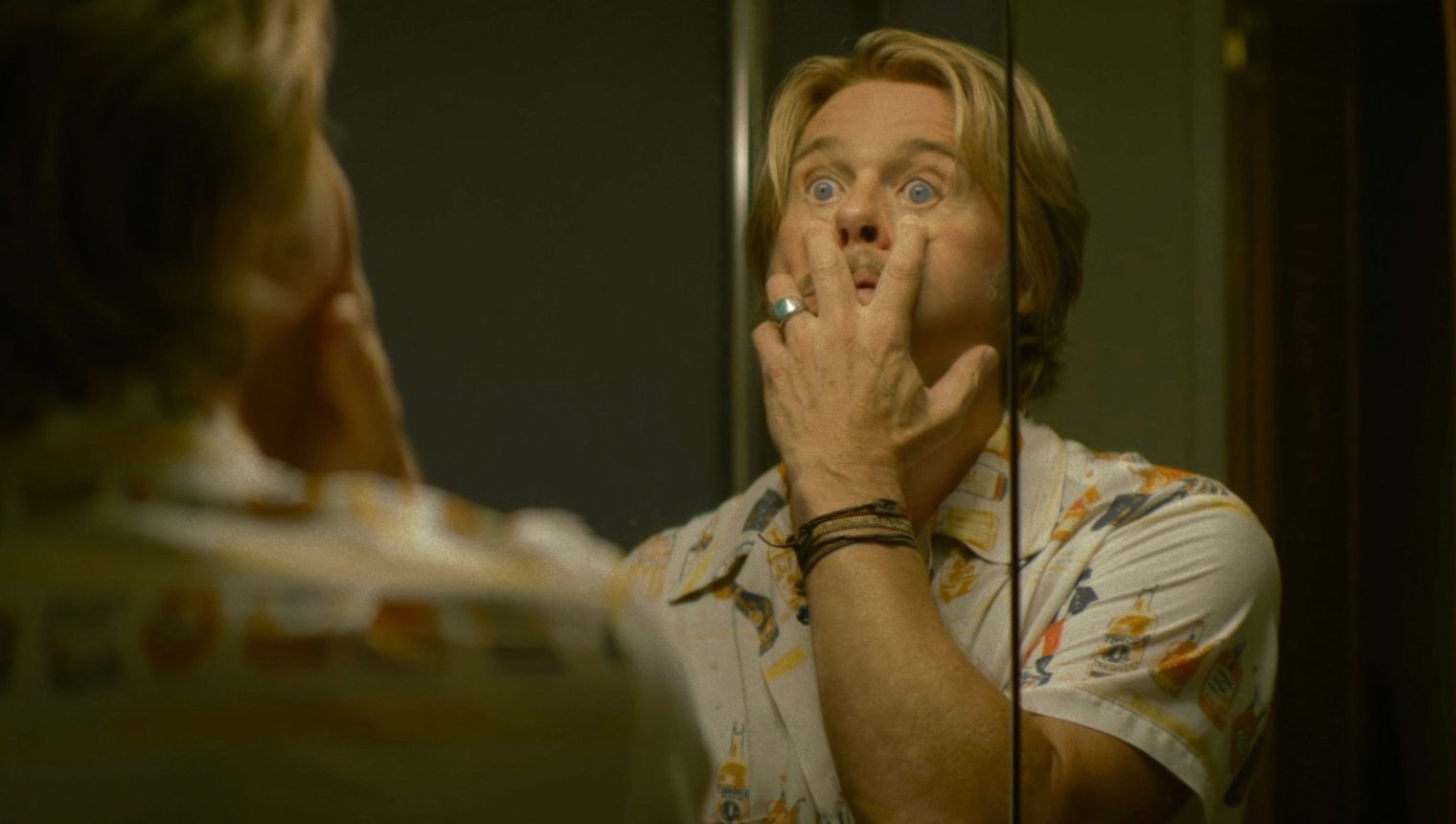
Fonzi never needed AI for his demolition derbies on Happy Days. Cliff Booth, though? That might be another question altogether.
Heading into the Thanksgiving weekend, David Fincher confirmed that artificial intelligence was used during post-production on The Further Mis-Adventures of Cliff Booth.
This adds another chapter to the debate surrounding the film after viewers and critics began questioning whether some of its visuals were generated using AI. First Tarantino-adjacent director Eli Roth admitted he used AI this past October on his horror flick Ice CreamMan. Now we have one of the most acclaimed directors of this generation doing the same. It appears that no film in Hollywood is safe. Like it or not?
This is the way of the future for movie making.
Fincher discussed the technology during an appearance on The Ringer’s The Big Picture podcast with host Sean Fennessey. Fincher explained that AI helped the editing team combine the strongest visual performance from one take with the best dialogue delivery from another. When the actors’ mouth movements did not match the selected audio, the technology could be used to adjust their lip movements.
How big of a deal is this in the scheme of things? Big Hollywood blockbusters have already been doing this for a couple of years or more when dubbing their films into another langue.
David Fincher said the actors spent approximately four or five days re-recording dialogue for the film. He also discussed how little traditional automated dialogue replacement was used, describing the remaining work as AI-assisted. The approach gave the editing team more flexibility to select the performances they wanted without being limited by whether the picture and sound came from the same take.
“We could use AI to re-lip that thing,” Fincher explained. He described the process as freeing, comparing filmmaking to working with plasticine rather than carving something out of marble. He also acknowledged that a couple of shots had not quite worked as intended, though he expected them to be addressed before the movie arrived on Netflix.
Fincher’s comments arrive after The Further Mis-Adventures of Cliff Booth began attracting criticism following early screenings. Filmmaker and YouTuber Patrick Tomasso was among the more vocal critics, writing on X that he walked out of the movie feeling “completely gutted.” He described what he believed was generative AI use as some of the most blatant he had seen in a major studio film.
Other viewers raised questions about visual inconsistencies they spotted in the movie and its promotional material. One frequently discussed example comes from the second trailer, which appears to show people seated in a horse-drawn carriage facing away from the horse and its reins. Some viewers interpreted the unusual composition as a possible AI-generated mistake.
Criticism has also focused on archival-style footage featuring Scott Caan’s character, Charlie Peters, and fictional television programs from his past. Some reviewers have described those sequences as apparent examples of generative AI imagery. The complaints have spilled onto Letterboxd, where the film has received half-star ratings from viewers citing its suspected AI use.
Not every response has been as critical. JoBlo’s Chris Bumbray, who reviewed the film after seeing it, said the apparent AI work was concentrated in the recreations of Charlie Peters’ television career. He argued that the sequences did not dominate the movie and offered a more favorable assessment of how the technology was used. The different reactions reflect how much disagreement remains over what viewers are seeing on screen and how significant those moments are to the finished film.
Fincher has not publicly addressed every specific allegation about the movie’s visuals. His appearance on The Big Picture also came after the podcast interview had been recorded, meaning the discussion did not directly address the criticism that emerged from early screenings.
The director had already spoken about his general outlook on AI in a November interview with the Los Angeles Times. “I’m not a Luddite, so I don’t fear the unknown,” Fincher said, later asking, “Well, it exists. Should we not use it?” He described the technology as another tool that could give filmmakers more options, rather than something that necessarily removes the people responsible for making a movie.
Fincher also discussed how AI could eventually change the way directors work on set. He suggested that filmmakers might be able to capture a carefully planned master performance and use technology to make adjustments that previously required additional takes. He maintained that the process would still rely on real human performances.
The conversation is taking place as Netflix expands its own involvement with AI filmmaking tools. The company acquired Ben Affleck’s production technology startup InterPositive in March in a deal reported at approximately $587 million. The company develops tools designed to help filmmakers work with footage during post-production, adding another layer to the discussion surrounding the technology’s place in Hollywood.
The Further Mis-Adventures of Cliff Booth, starring Brad Pitt and written by Quentin Tarantino, opened in IMAX theaters on November 25. The film is scheduled to arrive on Netflix on December 23, giving audiences who missed its theatrical run another opportunity to see the movie and form their own opinions about the scenes now drawing attention.